
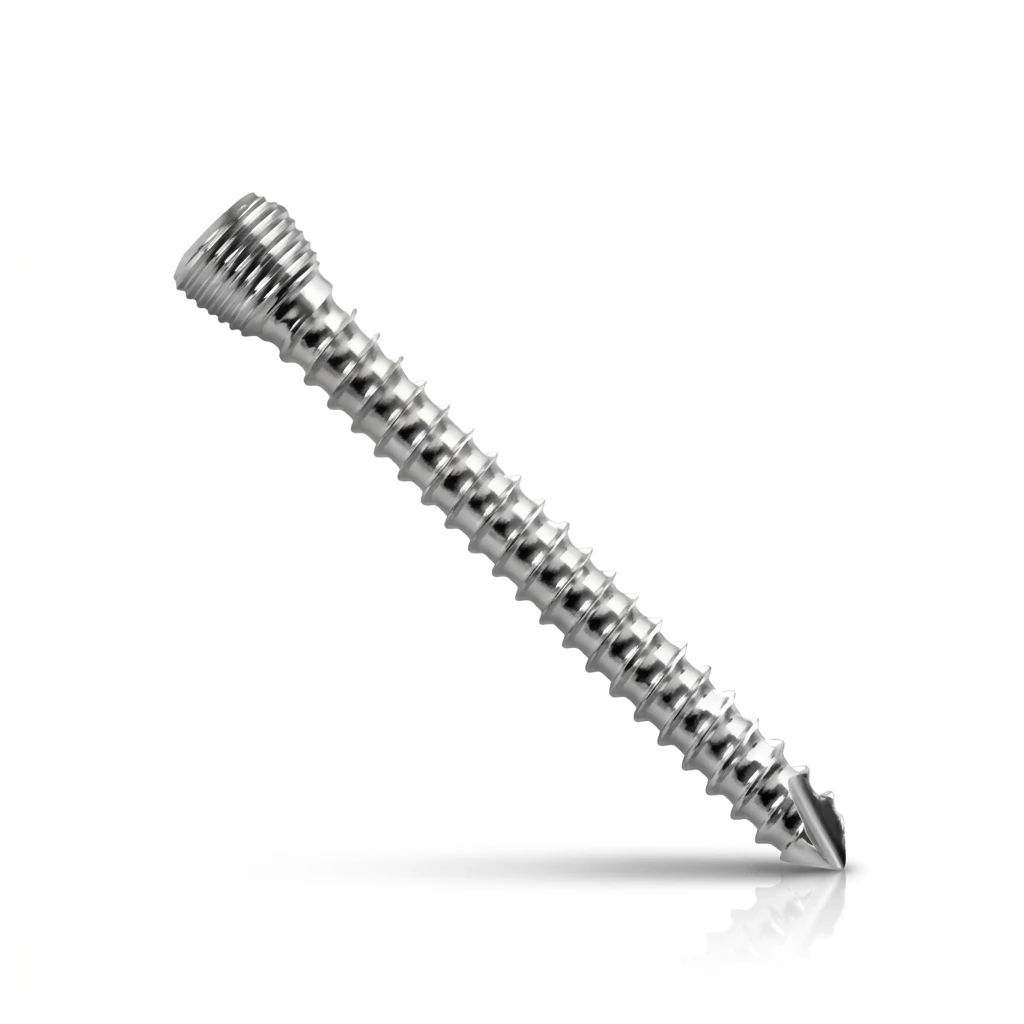
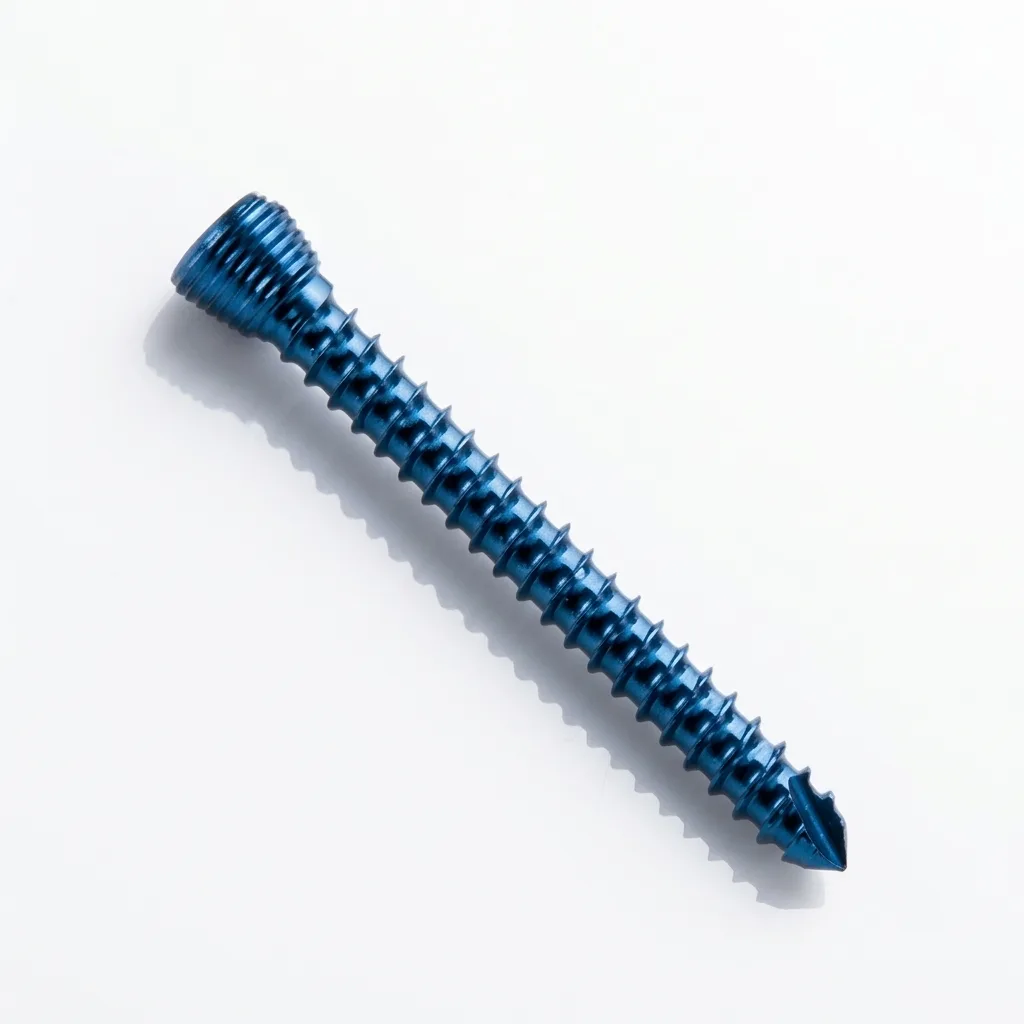
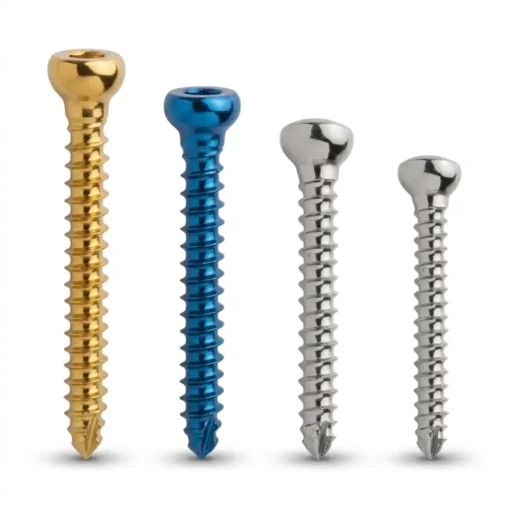
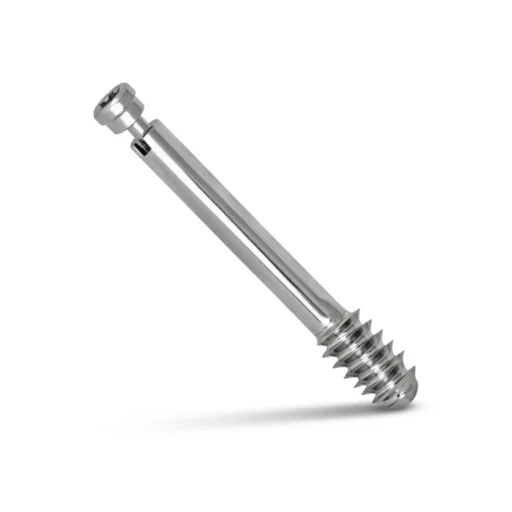
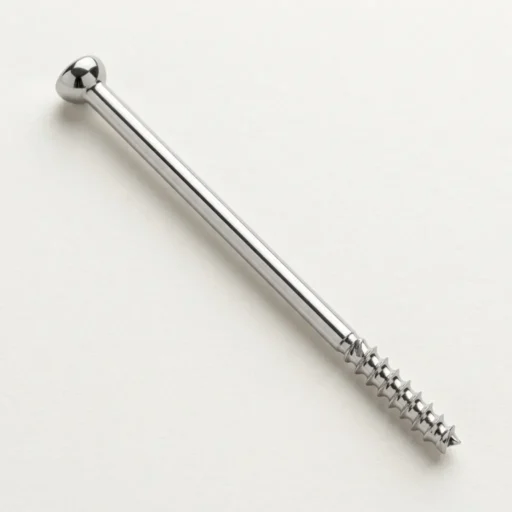
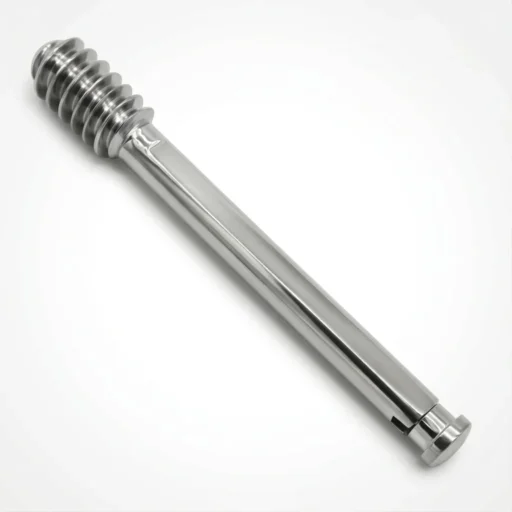
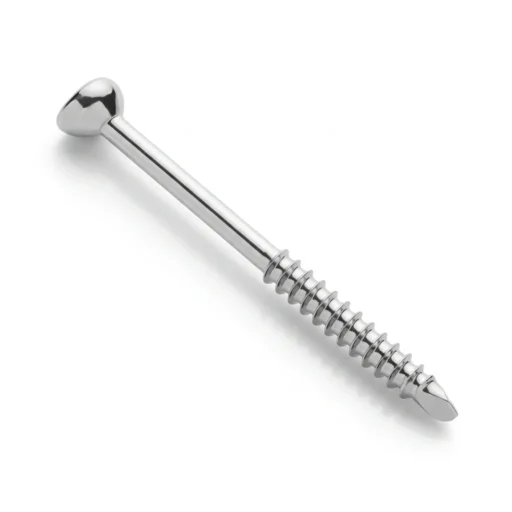
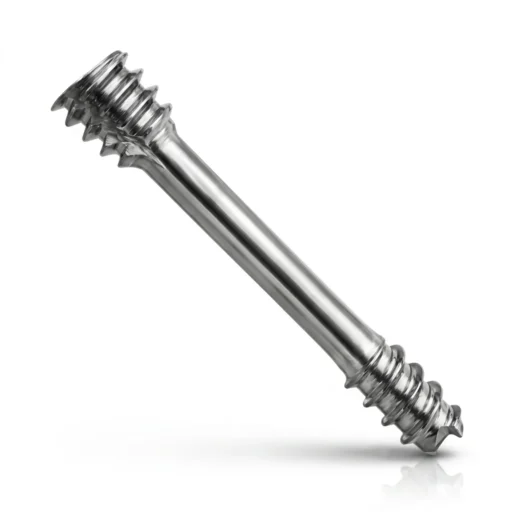
The Self-Tapping Locking Head Screw combines a threaded locking head with a self-tapping tip to work as part of a fixed-angle bone fixation construct. Because the tip cuts threads during insertion, surgeons can often skip a separate tapping step, depending on bone quality and drilling technique. This screw is available in multiple diameters and lengths, and comes in premium German stainless steel or titanium to suit different fixation system requirements.
Key Features
- Self-tapping tip: The tip cuts threads into pre-drilled bone during insertion. As a result, this design eliminates the need for a separate tapping step in many cases, though outcomes depend on bone quality, drilling technique, and the specific fixation system in use.
- Locking head thread interface: The threaded screw head engages the threaded holes of compatible locking plates. This engagement creates a fixed-angle construct that resists toggling and pull-out more effectively than conventional cortical screws.
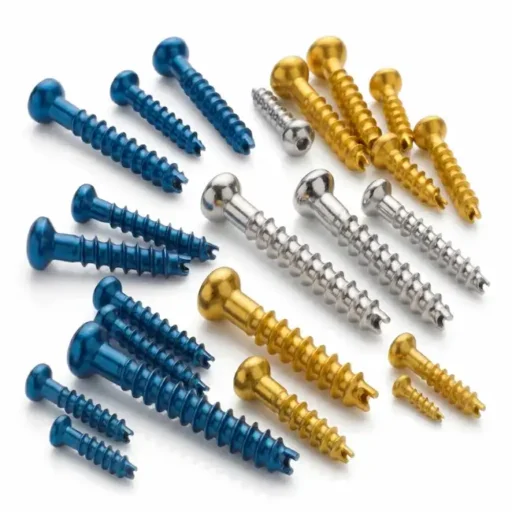
- Wide size range: Diameters run from 2.0 mm to 5.0 mm, and lengths extend up to 60 mm. Together, these options cover a variety of anatomical locations and fixation needs.
- Two material options: German stainless steel and titanium are both available, so procurement teams and surgeons can select the material that best fits their system and patient requirements.
Specifications
| Parameter | Details |
|---|---|
| Product | Self-Tapping Locking Head Screw |
| Diameters | 2.0 mm, 2.4 mm, 2.7 mm, 3.5 mm, 4.0 mm, 4.5 mm, 5.0 mm |
| Lengths | 10 mm to 60 mm (specific lengths vary by diameter and configuration) |
| Materials | Premium German stainless steel; titanium |
Materials
Stainless steel (316L grade) delivers good mechanical strength and corrosion resistance, and it remains a well-established choice in orthopedic implant manufacturing. In addition, stainless steel is generally more cost-effective than titanium, which makes it a practical option for many fixation applications.
Titanium, on the other hand, offers a lower density alongside a favorable strength-to-weight ratio and high biocompatibility. Furthermore, titanium produces less imaging artifact after surgery compared to stainless steel, which can be useful when monitoring fracture healing. Ultimately, material selection should follow the requirements of the fixation system, the anatomy involved, and professional judgment — since neither material is universally superior in every clinical situation.
Applications
Self-tapping locking head screws work within locking plate systems for orthopedic fracture fixation. Specifically, surgeons use them in applications such as:
- Long bone fracture fixation — femur, tibia, humerus, radius, and ulna
- Periarticular and metaphyseal fractures
- Small and large fragment fixation systems
- Comminuted or osteoporotic bone cases that require stable, fixed-angle constructs
Because this product forms part of a broader fixation system, only qualified orthopedic surgeons and medical professionals working within approved systems should use it.
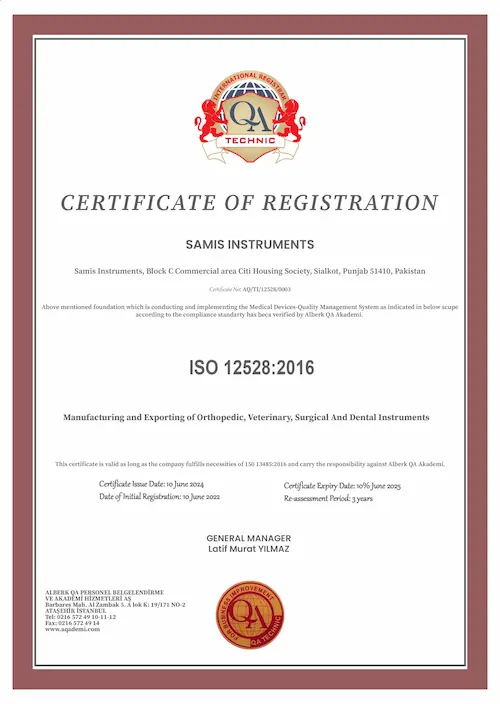
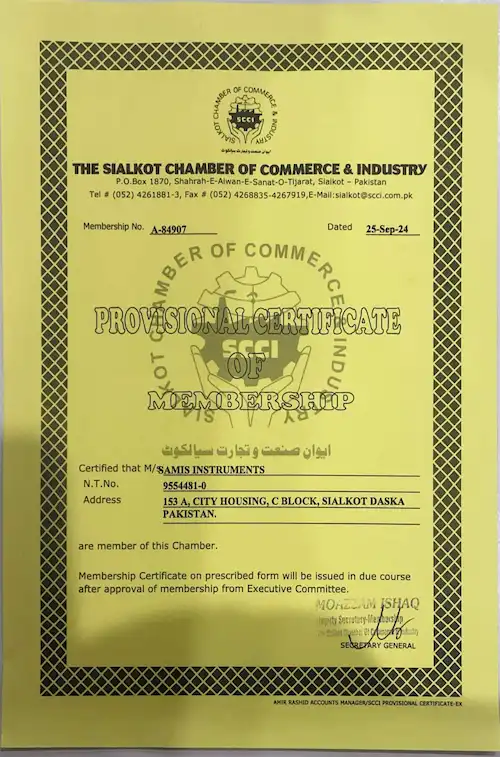
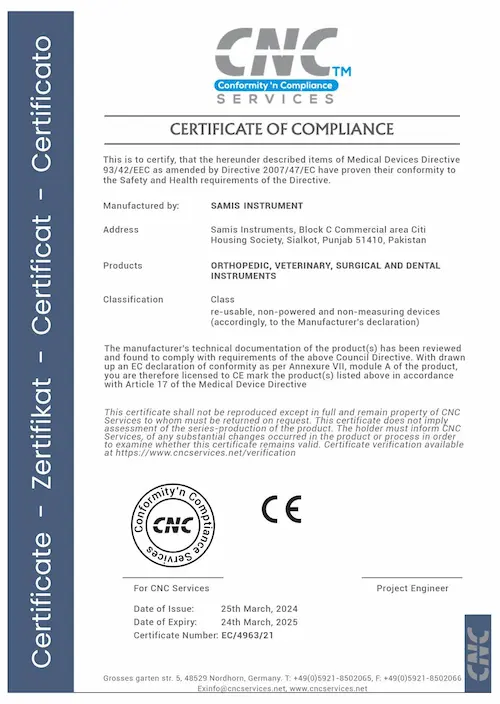
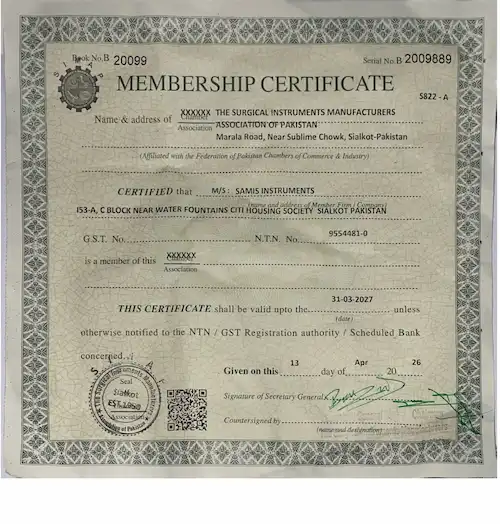
ISO, CNC, Chamber of Commerce & Surgical Instruments Manufacturers Association Certification Images – Sami’s Instruments








Write a Review