
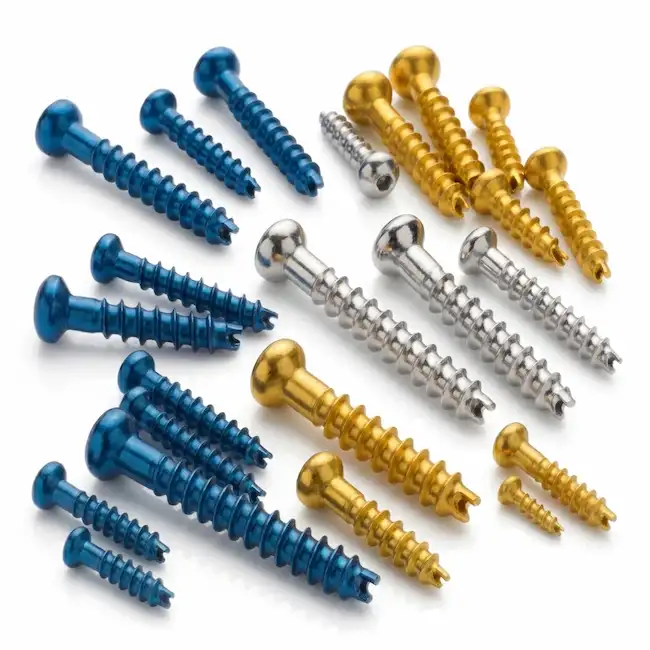
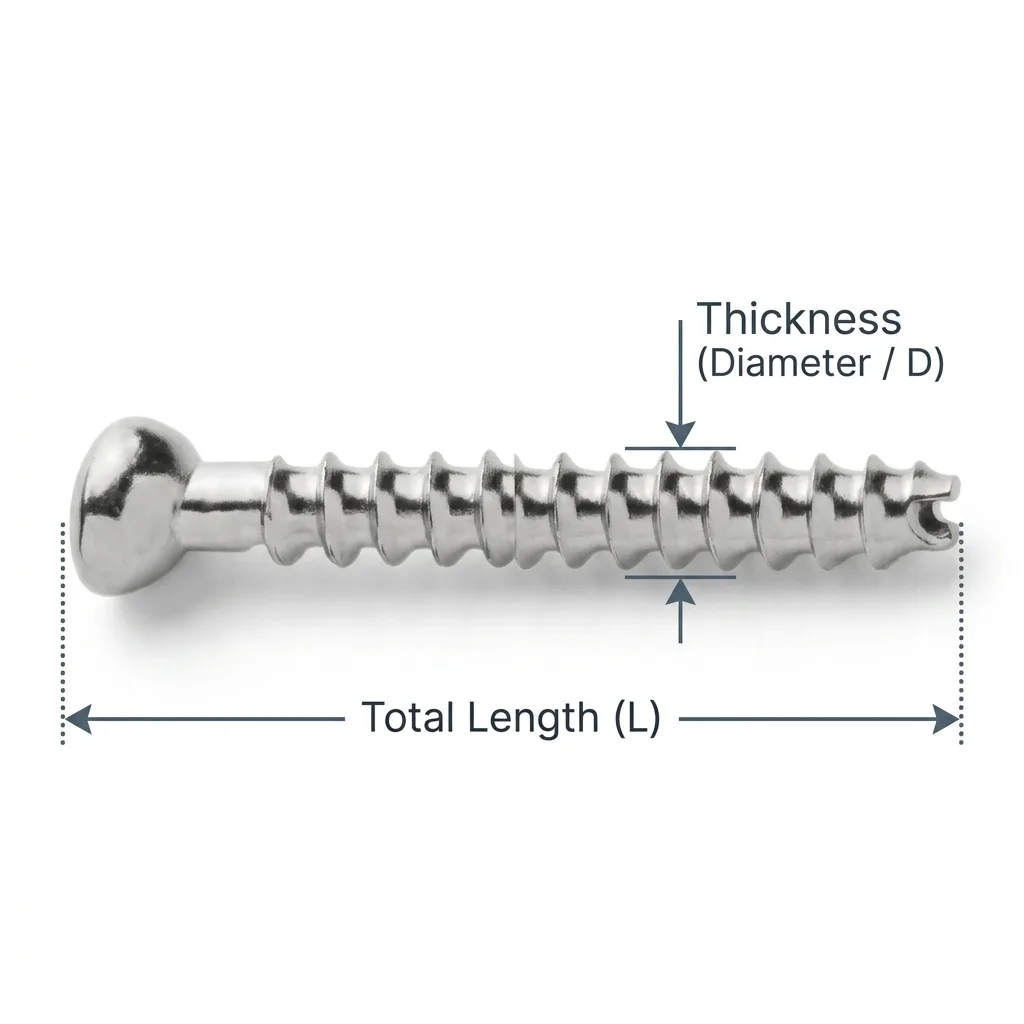
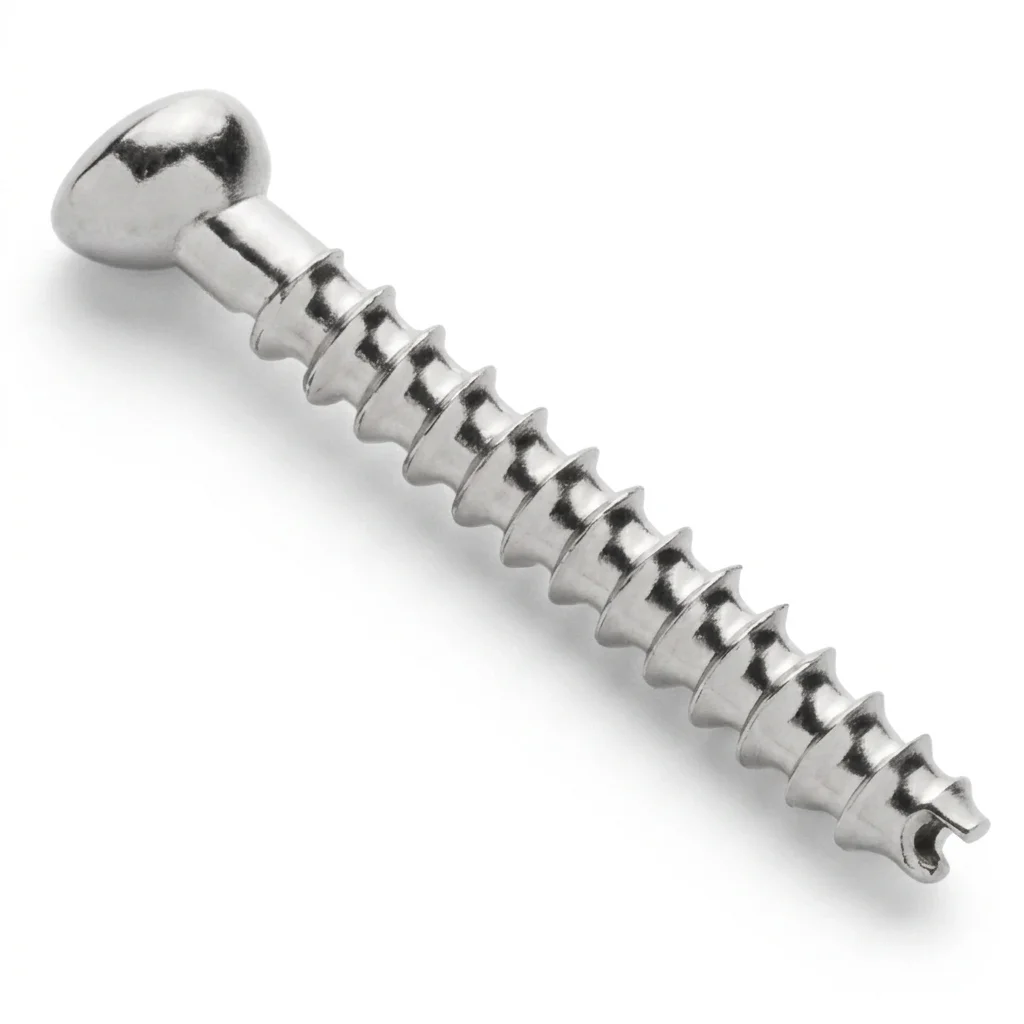

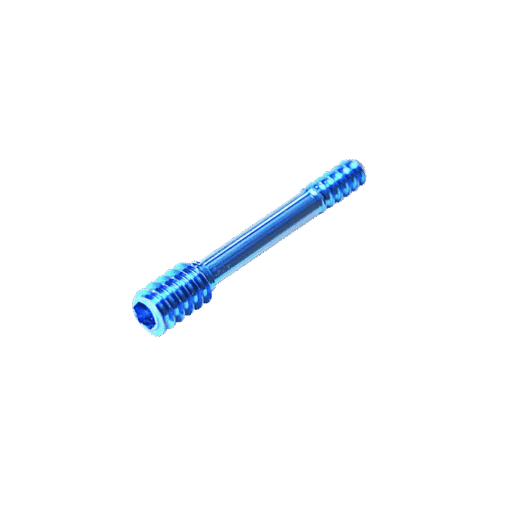
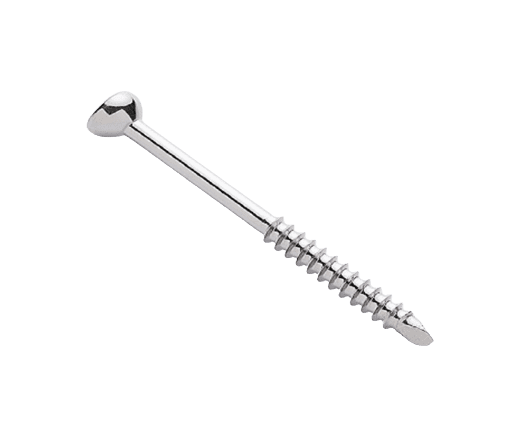
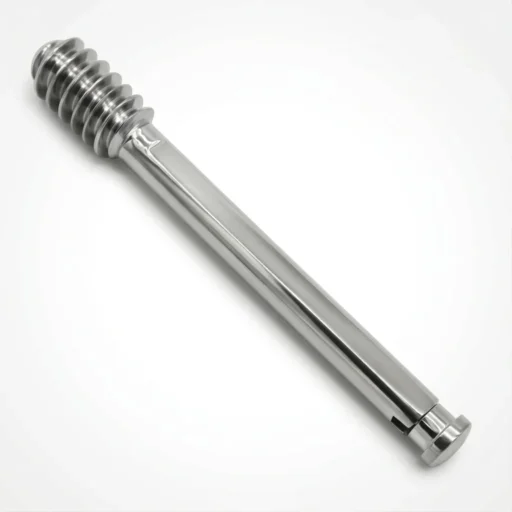
The Cannulated Cancellous Screw Fully Threaded is an orthopedic bone screw built for internal fixation in cancellous and metaphyseal bone. It has a hollow central shaft and full-length threading. Because of this design, surgeons can place it over a guide wire for accurate, image-guided positioning. In addition, it behaves differently from a partially threaded screw in both fixation style and clinical use. This screw is available in premium German stainless steel and titanium. Moreover, it comes in a wide range of diameters and lengths to meet diverse surgical needs.
What Is a Cannulated Cancellous Screw?
A cannulated cancellous screw has a hollow channel running through its full length. This channel lets the surgeon slide the screw over a pre-placed guide wire or Kirschner wire. First, the surgeon places the guide wire at the target site. Then, fluoroscopic imaging confirms the correct path. Finally, the screw moves along that same path. As a result, placement becomes more accurate. It also reduces the need for multiple bone entries.
The cancellous thread uses a coarse, wide pitch. This design grips trabecular bone well. Trabecular bone is the soft, spongy bone found at the ends of long bones. Therefore, cancellous screws work better in these areas than cortical screws.
What Does Fully Threaded Mean?
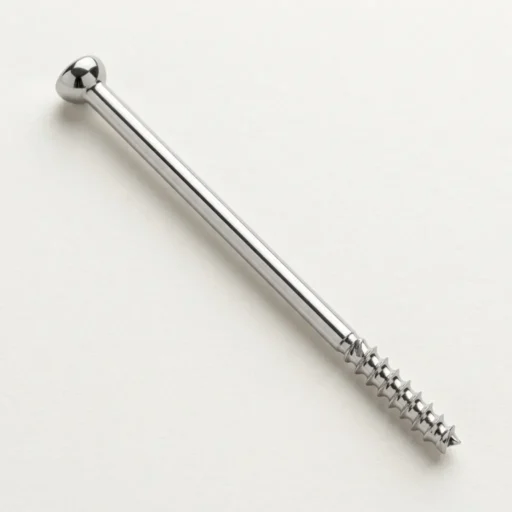
In a fully threaded screw, threads run from the tip to the head. As a result, the screw grips bone along its entire length. This is different from a partially threaded design, where a smooth shank creates compression across the fracture gap. Instead, the fully threaded version provides positional fixation. It holds bone fragments in place and resists shear and rotational forces. For this reason, surgeons choose it when positional stability matches the surgical plan.
In addition, the thread running into the head improves grip. This is especially useful in soft or weak bone, where holding power can be harder to achieve.
Key Features and Benefits
- Hollow shaft. The central channel supports guide-wire-assisted insertion. Surgeons confirm the path under imaging before placing the screw. This improves accuracy during surgery.
- Full-length threading. Threads cover the entire screw. They grip bone along the full length and resist shear and shortening forces.
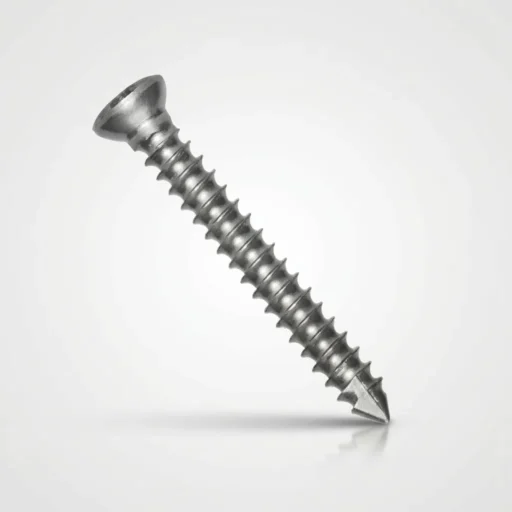
- Coarse cancellous thread. The wide thread pitch improves grip in soft trabecular bone at the ends of long bones.
- Low-profile head. The head sits close to the bone. This lowers the chance of soft tissue problems after surgery.
- Wide diameter range. Sizes run from 1.5mm to 8.0mm. Surgeons can therefore match the screw to the bone size and surgical site.
- Long length range. Lengths run from 6mm to 110mm in 38 steps. As a result, teams can pick the right length for each case.
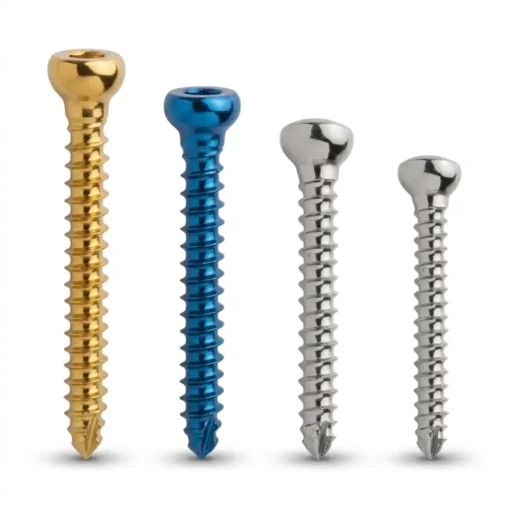
- Two material options. Premium German stainless steel and titanium are both available. Teams can choose based on clinical need.
Where It Is Used
Fully threaded cannulated cancellous screws suit a broad range of orthopedic and trauma procedures. However, the surgeon must always judge suitability based on the patient. Common use areas include:
- Fracture fixation in metaphyseal bone
- Internal fixation at the hip, ankle, knee, foot, wrist, and hand
- Percutaneous fixation with fluoroscopic guidance
- Cases where positional fixation suits the fracture better than compression
- Cases with soft or weak bone, where thread grip is a key factor
- Small-bone and large-bone procedures, depending on the diameter chosen
Material Options
Stainless Steel Cannulated Cancellous Screw
Premium German stainless steel has a long record of use in orthopedic implants. It suits a wide range of standard surgical and procurement settings.
Titanium Cannulated Cancellous Screw
Titanium is available for cases where a non-steel implant is preferred. This includes cases with known metal sensitivities or specific imaging needs. Both options meet the needs of hospitals, surgical centers, distributors, and procurement teams.
Available Diameters
This screw comes in thirteen diameters:
- 1.5mm
- 2.0mm
- 2.7mm
- 3.0mm
- 3.5mm
- 4.0mm
- 4.5mm
- 5.0mm
- 6.0mm
- 6.5mm
- 7.0mm
- 7.3mm
- 8.0mm
Smaller sizes such as the 1.5mm, 2.0mm, and 2.7mm suit small-bone and fine procedures. Mid-range options including the 3.5mm, 4.0mm, and 4.5mm Cannulated Cancellous Screw cover a broad range of trauma and fixation cases. Furthermore, larger sizes such as the 6.5mm, 7.3mm, and 8.0mm address hip and long-bone fixation needs.
Available Lengths
38 length options are available to match bone depth and size:
6mm, 8mm, 10mm, 12mm, 14mm, 16mm, 18mm, 20mm, 22mm, 24mm, 26mm, 28mm, 30mm, 32mm, 34mm, 36mm, 38mm, 40mm, 42mm, 44mm, 46mm, 48mm, 50mm, 52mm, 54mm, 56mm, 58mm, 60mm, 65mm, 70mm, 75mm, 80mm, 85mm, 90mm, 95mm, 100mm, 105mm, 110mm.
Surgeons choose length based on preoperative measurement and intraoperative checks. For example, the 3.5mm x 10mm through 3.5mm x 110mm range suits small-to-medium bone sites. Larger options such as the 6.5mm x 70mm through 6.5mm x 100mm and the 7.3mm x 100mm through 7.3mm x 110mm suit deeper fixation in larger bones.
Product Specifications
| Specification | Detail |
|---|---|
| Product Type | Cannulated Cancellous Screw (Fully Threaded) |
| Design | Fully Threaded / Cannulated |
| Thread Type | Cancellous (coarse pitch) |
| Material | Premium German Stainless Steel / Titanium |
| Available Diameters | 1.5mm, 2.0mm, 2.7mm, 3.0mm, 3.5mm, 4.0mm, 4.5mm, 5.0mm, 6.0mm, 6.5mm, 7.0mm, 7.3mm, 8.0mm |
| Available Lengths | 6mm – 110mm (38 sizes) |
| Insertion Method | Guide-wire-assisted (cannulated) |
| Intended Users | Orthopedic surgeons, trauma surgeons, hospitals, surgical centers, medical distributors |
0 Verified Customer Reviews for Cannulated Cancellous Screw (Fully Threaded)
Quality Assurance: Samis Instruments products are manufactured under ISO 13485 quality management standards and CE compliance guidelines, and are registered with the Sialkot Chamber of Commerce. View our certifications.






Write a Review