
What Is a DHS Lag Screw?
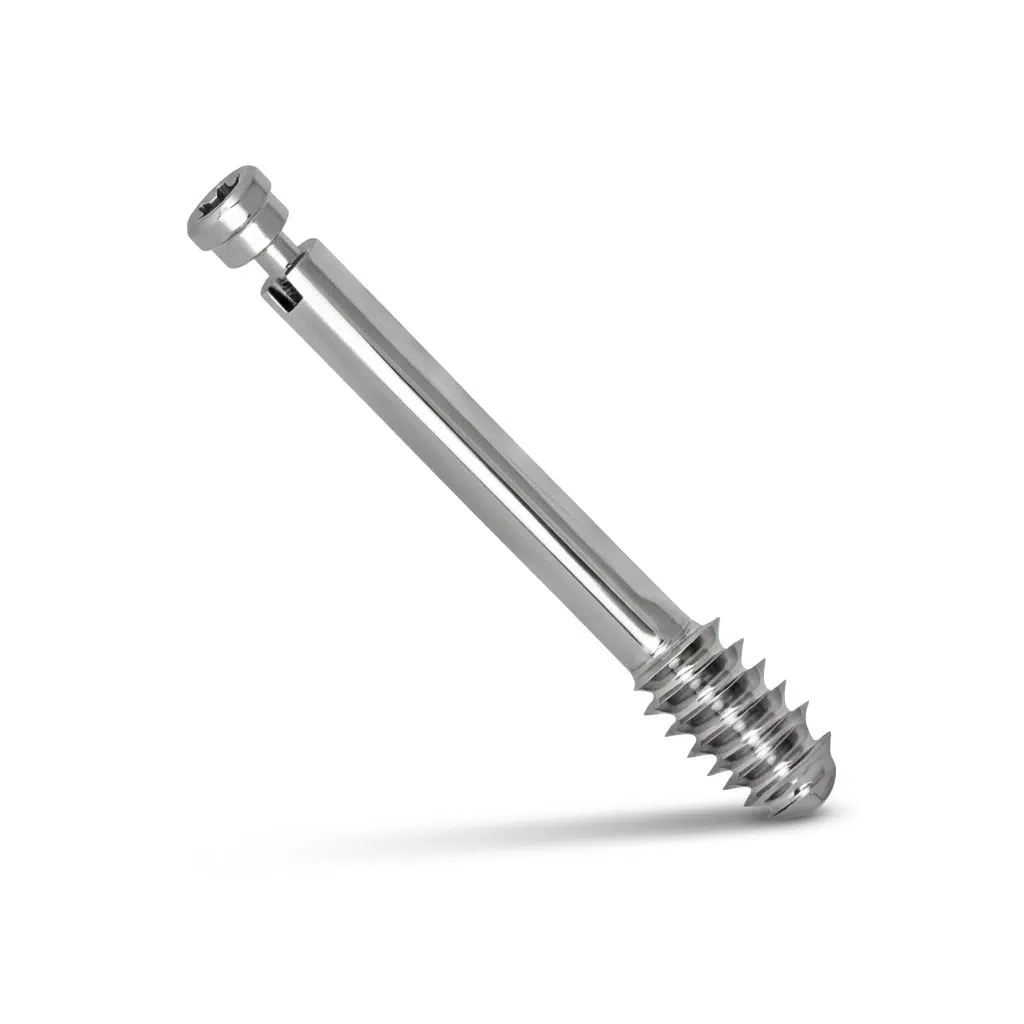
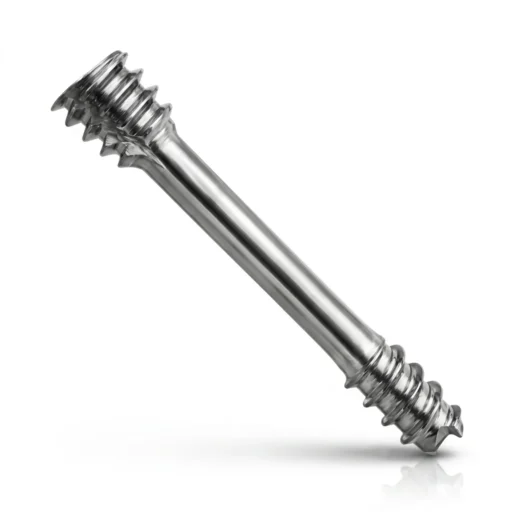
The DHS lag screw is the primary fixation component of the dynamic hip screw system. It seats inside the femoral head and neck. Together with a barrel side plate, it delivers controlled compression across proximal femur fracture sites. Its key feature is a sliding mechanism. This allows the screw to move axially within the plate barrel as the patient bears weight. As a result, bone fragments gradually compress while fracture alignment holds.
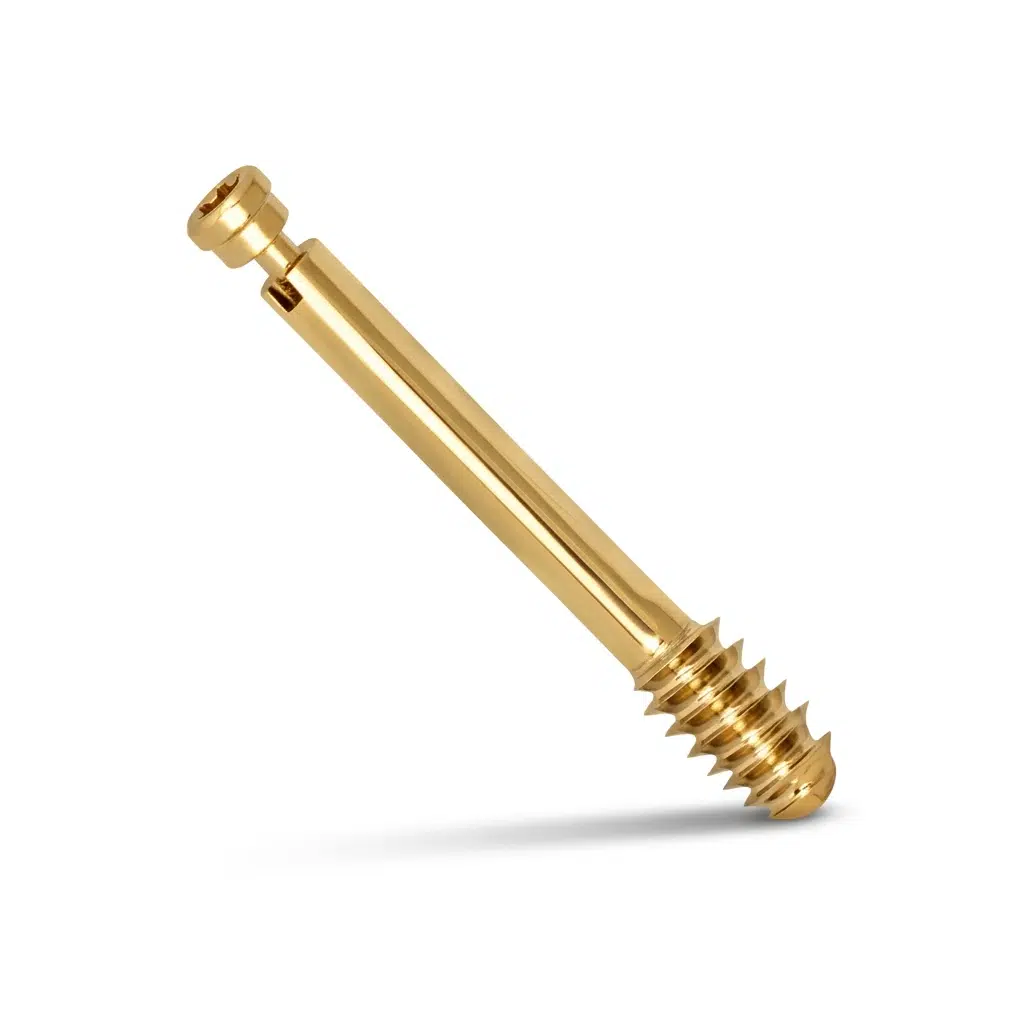
This implant is available in premium German stainless steel and titanium. Thread diameters are 12.5 mm and 12.7 mm. Lengths run from 50 mm to 145 mm, covering a wide range of patient anatomies.
Key Design Features
The DHS lag screw includes several important design characteristics.
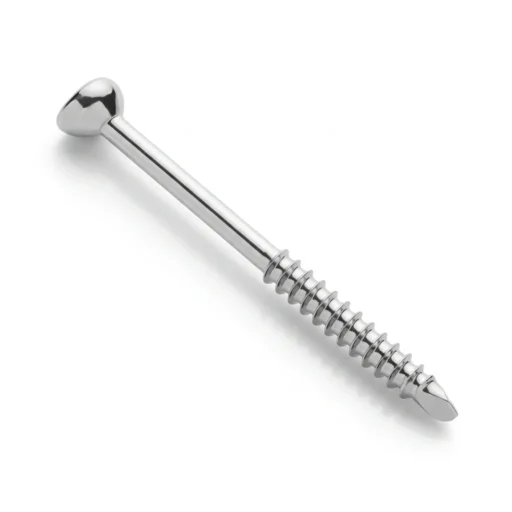
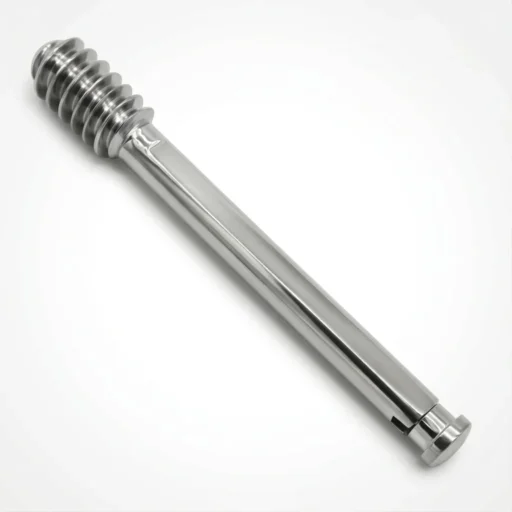
- Partial distal threading: The threaded tip grips cancellous bone inside the femoral head. The smooth proximal shaft, in turn, slides freely inside the plate barrel.
- Cannulated body: A hollow central bore allows insertion over a guide wire. This supports accurate, image-guided placement and helps achieve the correct tip position within the femoral head.
- Internal proximal threading: The lateral end accepts a compression screw. This lets the surgeon apply interfragmentary compression after fixing the side plate to the femoral shaft.
- Anti-rotation geometry: The shaft profile fits the barrel so the screw can slide axially. At the same time, it prevents the screw from rotating inside the barrel.
- Wide length range: Twenty lengths from 50 mm to 145 mm, in 5 mm steps, accommodate different femoral neck sizes.
Material Options
Two material options are available:
- Premium German stainless steel — strong and corrosion-resistant, with a long track record in orthopedic implant manufacturing.
- Titanium — lighter than stainless steel, with a favorable strength-to-weight ratio. It is a common choice where material preference is a clinical or institutional requirement.
Technical Specifications
| Specification | Detail |
|---|---|
| Product | DHS Lag Screw |
| Thread Diameter | 12.5 mm / 12.7 mm |
| Available Lengths | 50, 55, 60, 65, 70, 75, 80, 85, 90, 95, 100, 105, 110, 115, 120, 125, 130, 135, 140, 145 mm |
| Material | Premium German stainless steel; Titanium |
Orthopedic Applications
Surgeons use the DHS lag screw most often in the treatment of stable intertrochanteric fractures. The sliding mechanism allows dynamic compression at the fracture site as load increases during weight-bearing. For this reason, it suits cases where progressive bone impaction supports healing.
In addition, surgical literature references its use in selected femoral neck fracture configurations. In these cases, surgeons often place an antirotation screw parallel to the lag screw. This preserves the sliding function while adding rotational stability.
Correct central placement of the threaded tip within the femoral head is an important positioning goal. Depth relative to the articular surface also plays a role in fixation quality.
Sizing Considerations
The surgeon measures screw length intraoperatively after guide wire placement. The goal is to seat the tip correctly in the femoral head while leaving enough shaft travel for the sliding mechanism to work. For example, shorter lengths of 50 mm to 75 mm often pair with short-barrel plate configurations.
The 5 mm increments across all twenty available lengths allow close matching to the measured femoral neck depth. However, compatibility with a specific side plate system should always be confirmed against the instruments and implant set in use, since barrel dimensions and plate angles vary between manufacturers.
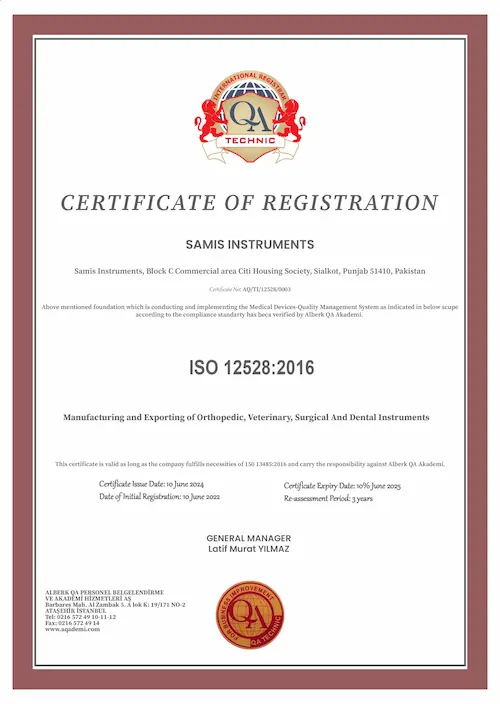
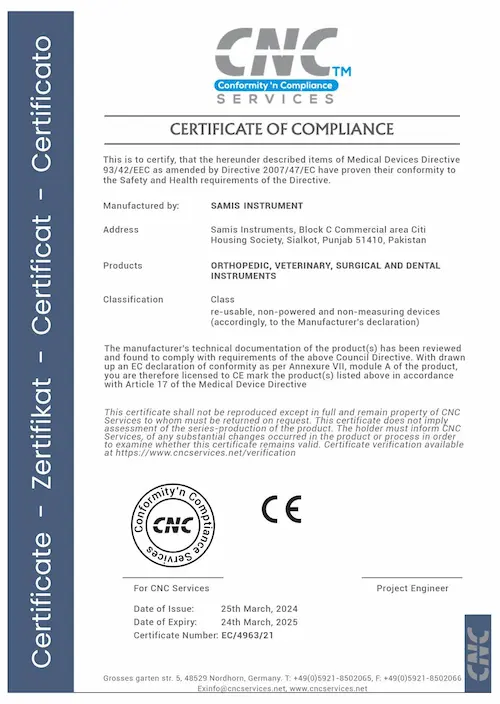
ISO, CNC, Chamber of Commerce & Surgical Instruments Manufacturers Association Certification Images – Sami’s Instruments










Write a Review