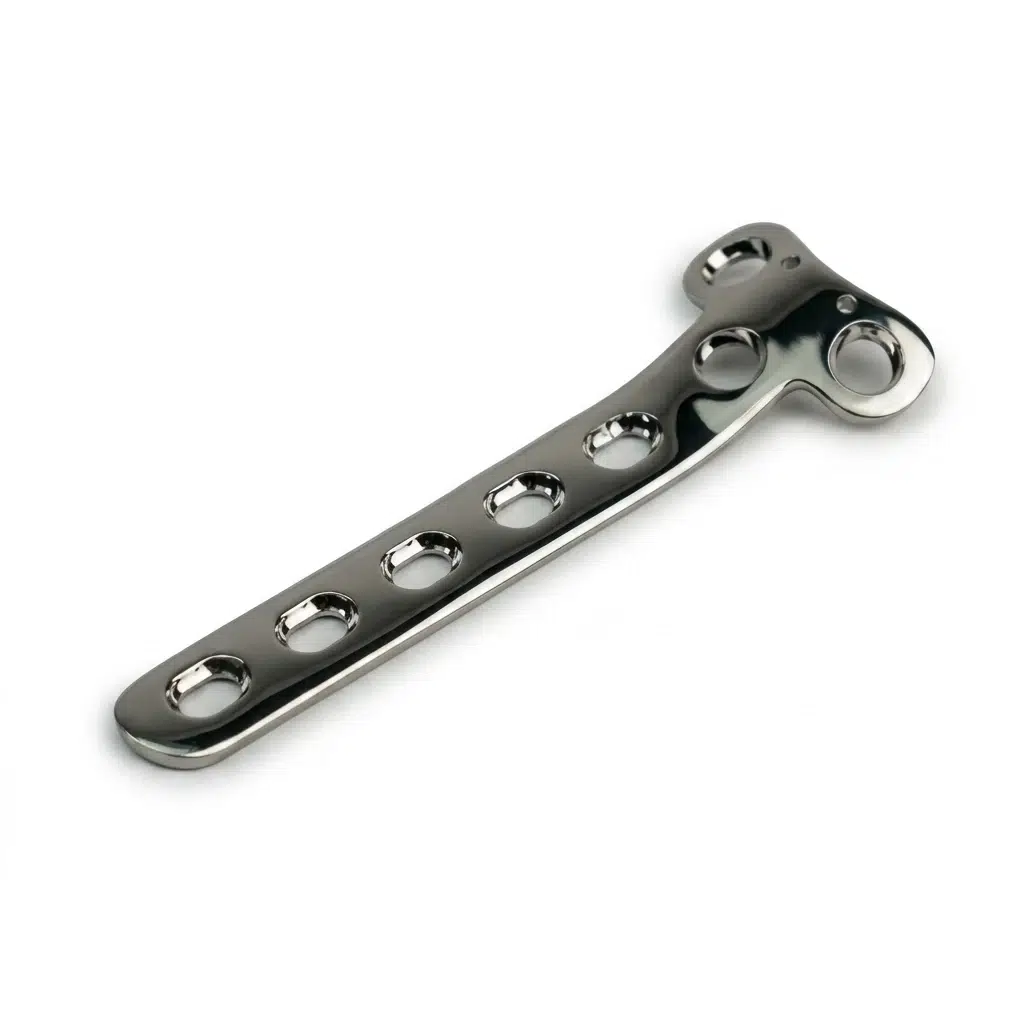
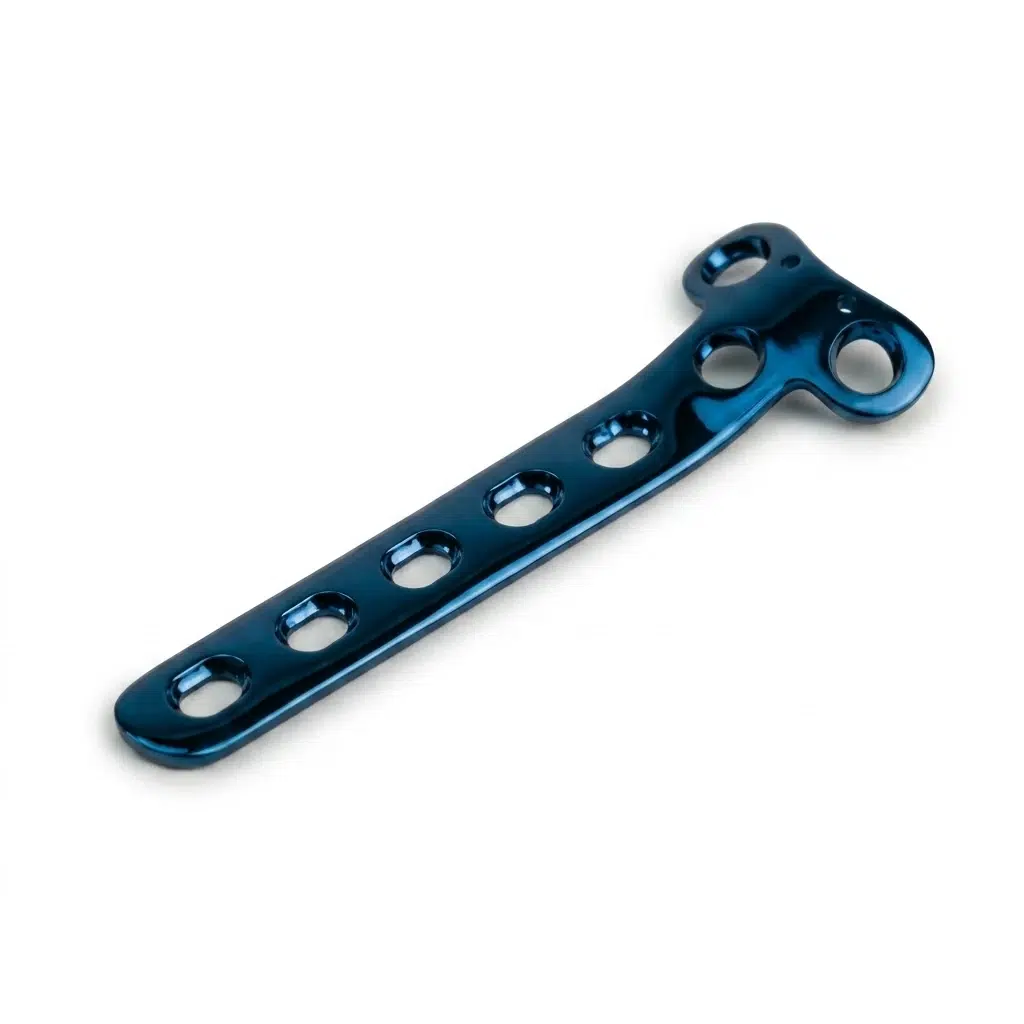
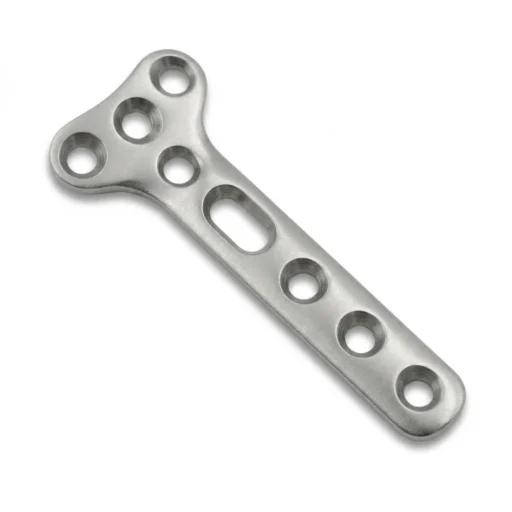
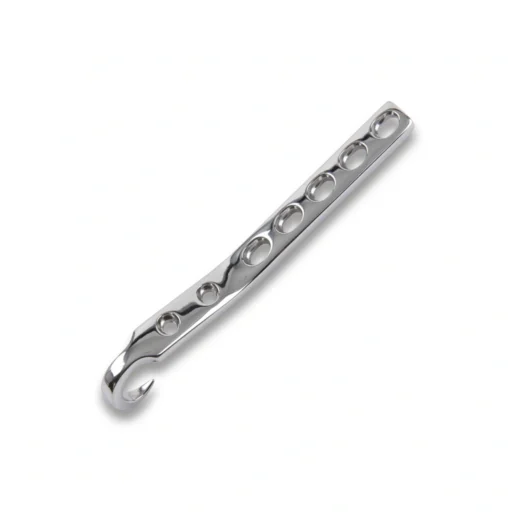
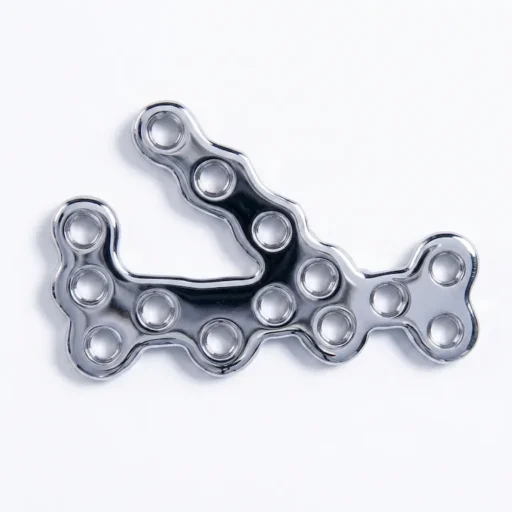
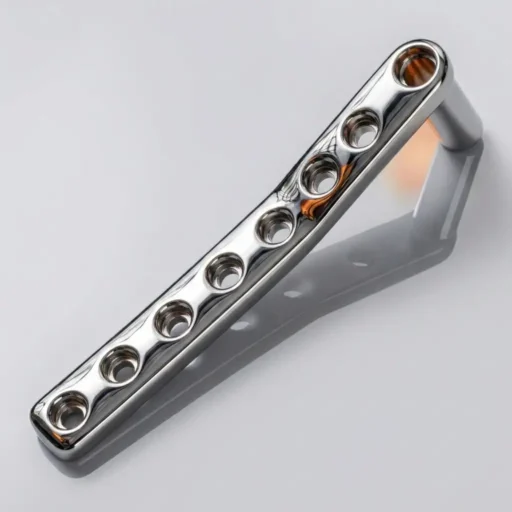
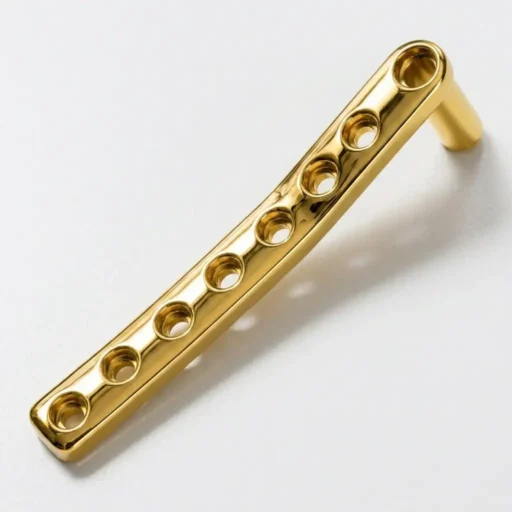
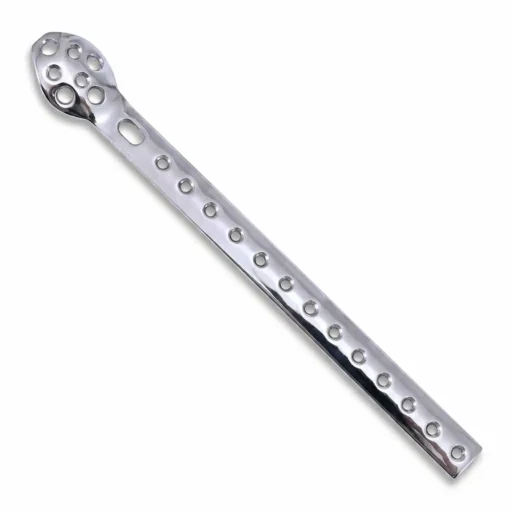
Surgeons use the T Buttress Plate to stabilize periarticular fractures near the proximal tibia. As a result, the plate supports depressed or comminuted metaphyseal fragments during fixation. Its T-shaped head rests against the wider bone surface below the joint line, while the elongated shaft runs along the tibial shaft to anchor the construct. Because of this shape, surgeons can address both the articular fragment and the shaft with one implant.
Design and Function
The head of the plate holds cancellous screws, which grip softer metaphyseal bone. Meanwhile, the shaft holes hold cortical screws, which secure the diaphyseal portion. This combination lets one construct span two different bone qualities, so surgeons don’t need to switch implants mid-procedure. As a buttress, the plate resists axial and shear forces that would otherwise push a reduced fragment back into the joint. Therefore, this support matters most in tibial plateau injuries with a depressed or split fragment.
Applications
Surgeons typically apply this implant plate during open reduction and internal fixation (ORIF) of proximal tibia fractures, since buttress support of the plateau guides this choice. Hospitals and trauma centers usually stock several hole configurations so the fixation plate can match different fracture lengths and fragment sizes.
Material and Specifications
The device comes in two material options, since implant durability and biocompatibility drive this choice:
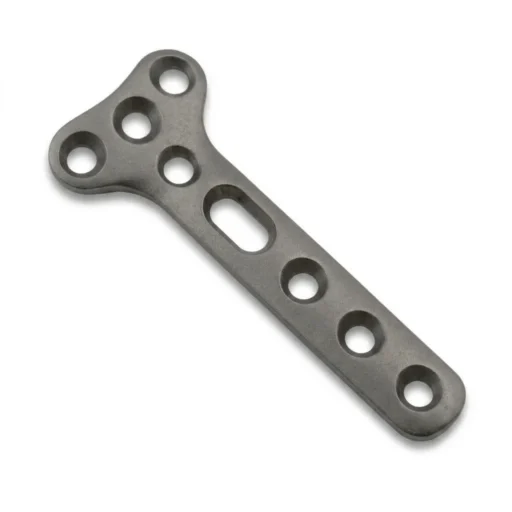
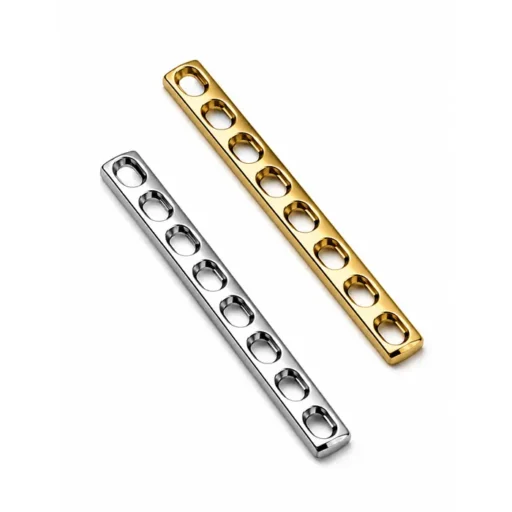
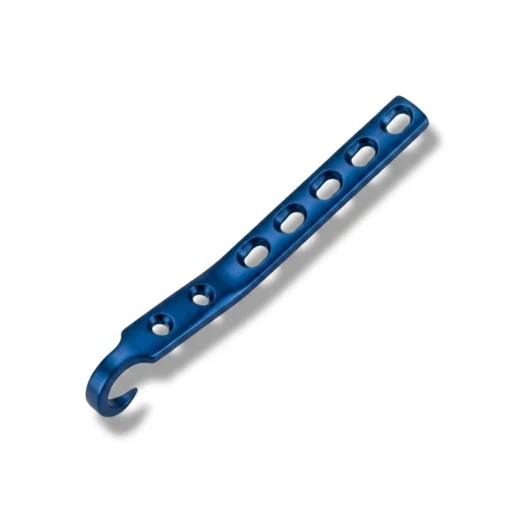
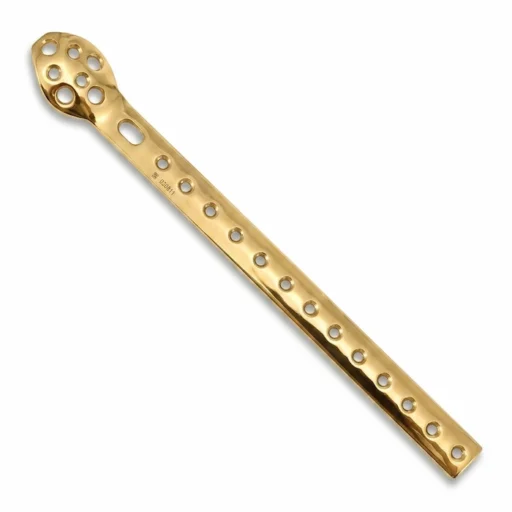
- Material: Premium German Stainless Steel or Titanium
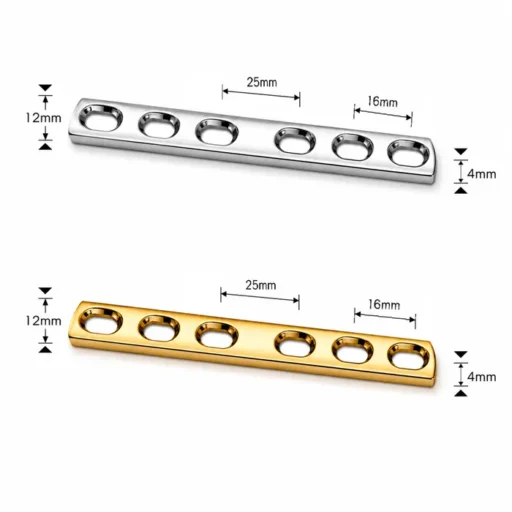
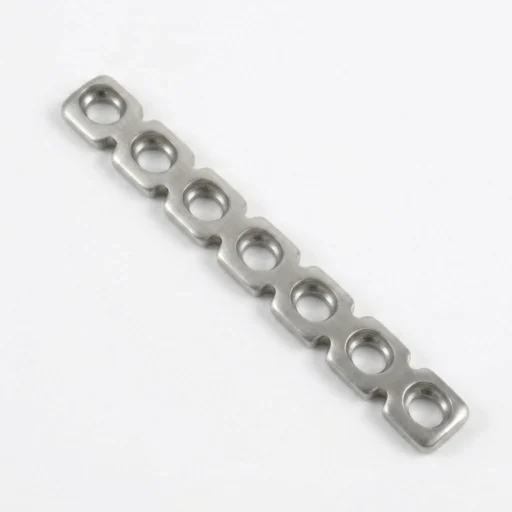
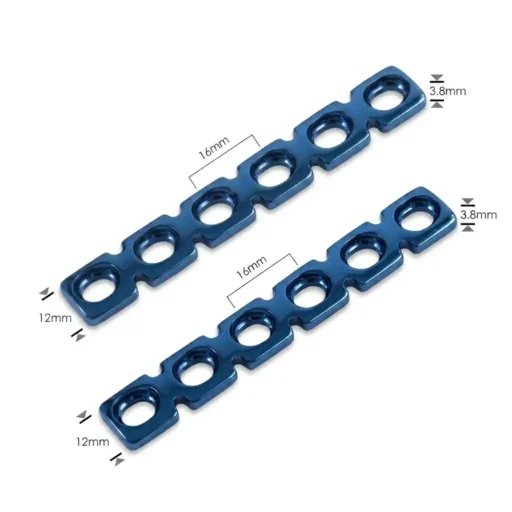
- Hole configuration: 3 to 12 holes
- Head design: T-shaped, with cancellous screw holes
- Shaft design: elongated, with cortical screw holes
- Indicated use: buttress fixation of proximal tibia and periarticular fractures
Quality Assurance: Samis Instruments products are manufactured under ISO 13485 quality management standards and CE compliance guidelines, and are registered with the Sialkot Chamber of Commerce. View our certifications.
Write a Review