
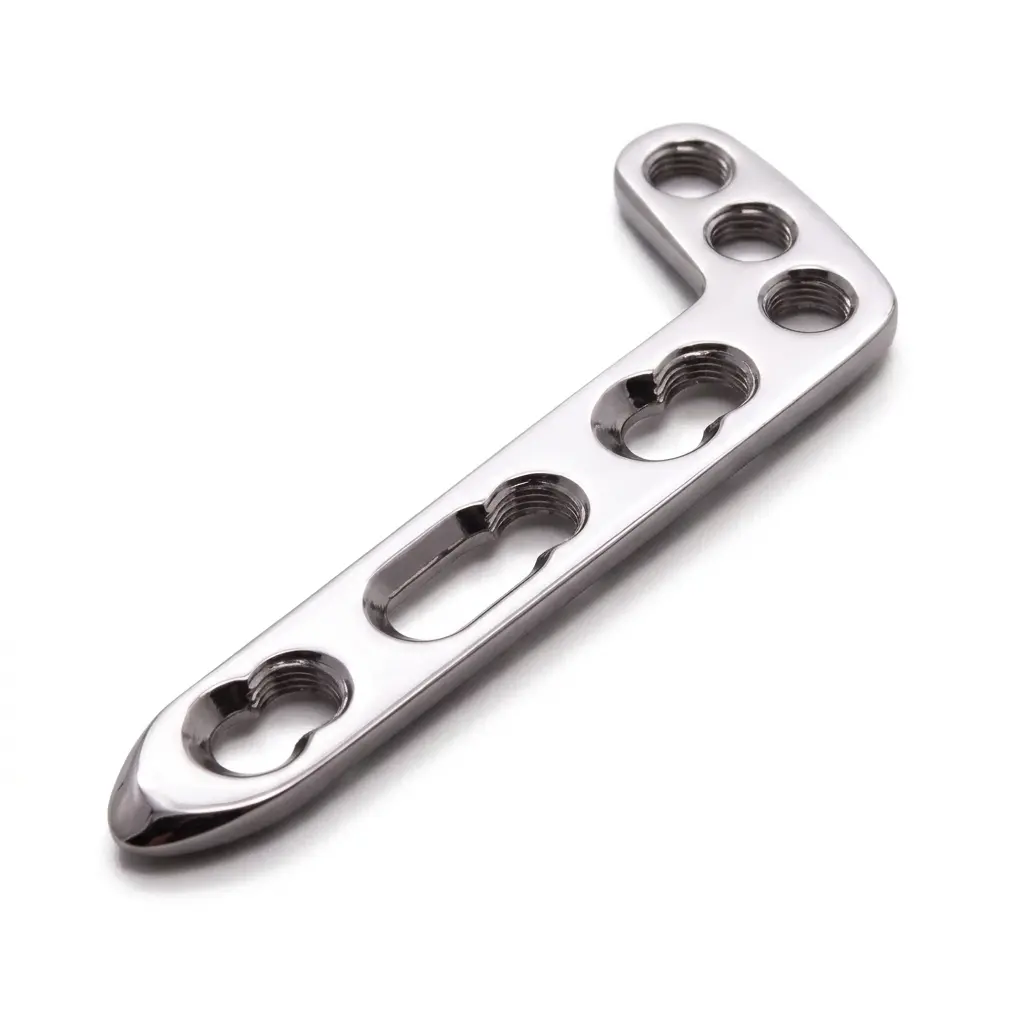
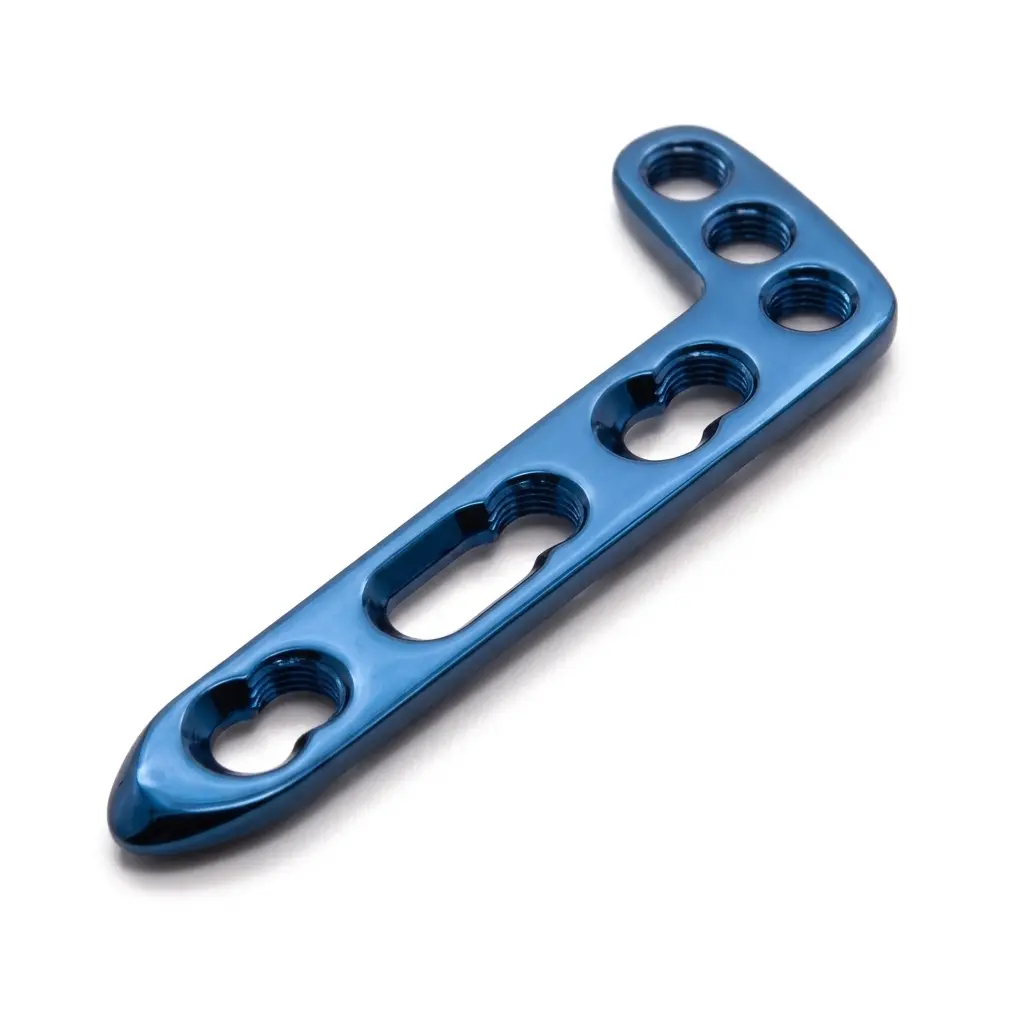
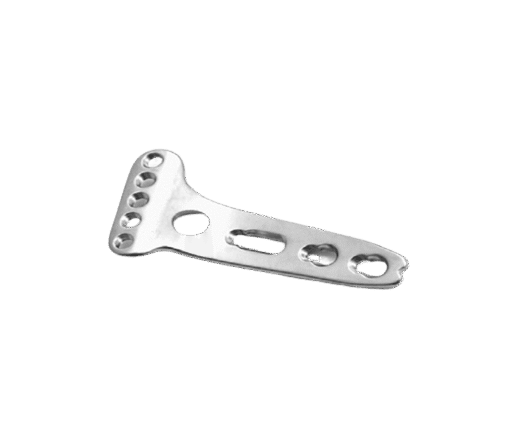
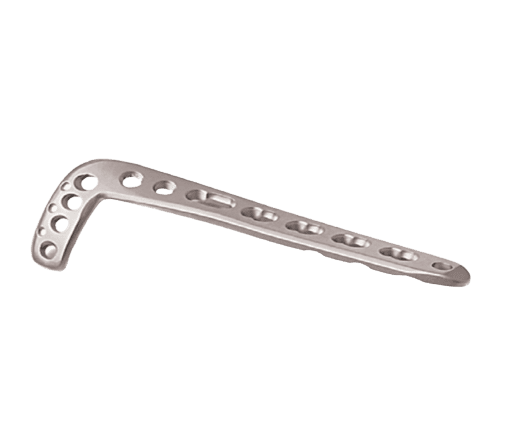
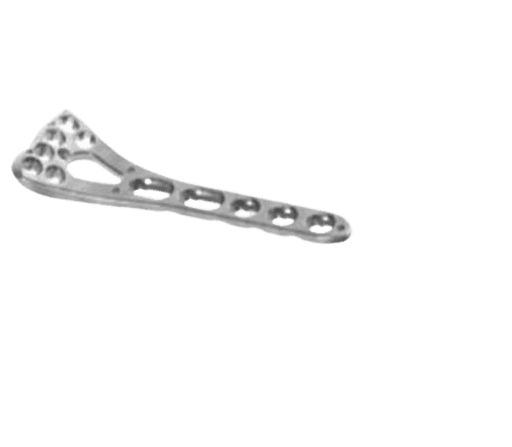
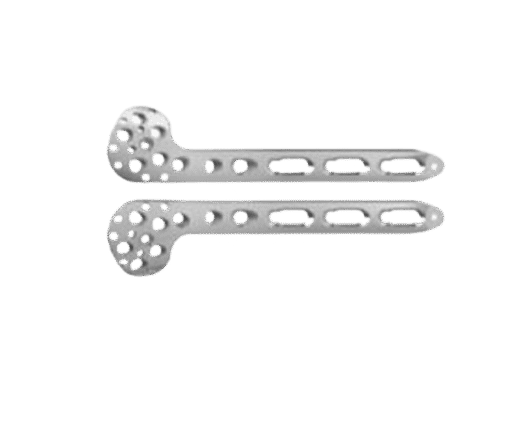
The L Distal Radius Oblique Locking Plate is an orthopedic implant for internal fixation of distal radius fractures. Its L-shaped profile fits the natural contour of the distal radius. The wider head section covers the distal fragment. The narrower shaft section runs proximally along the radial bone. Together, these two sections support stable fixation across the fracture site.
Key Features and Benefits
- L-Shaped Profile — The plate follows the natural form of the distal radius. As a result, it sits close to the bone and rarely needs intraoperative bending.
- Locking Head Holes — The head holes hold locking screws at fixed angles. This creates a rigid construct that resists movement under load. It is especially useful in comminuted or osteoporotic bone, where conventional screws may lose purchase.
- Shaft Holes for Proximal Fixation — The shaft holes anchor the plate to intact cortical bone above the fracture zone. In addition, the choice between a 3-hole and 4-hole shaft allows the surgeon to match fixation length to the fracture pattern.
- Oblique Orientation — The oblique design suits fracture patterns where a straight or T-plate does not adequately cover the fracture geometry.
- Low-Profile Build — The plate sits close to the bone surface. Consequently, it reduces soft tissue pressure after implantation.
- Left and Right Versions — Dedicated left and right plates allow accurate anatomical fit for each operative side.
Available Configurations
| Configuration | Head Holes | Shaft Holes |
|---|---|---|
| Configuration 1 | 3 | 4 |
| Configuration 2 | 3 | 3 |
The 4-shaft-hole option offers greater proximal coverage. The 3-shaft-hole option suits shorter fixation needs. Both share the same 3-hole head section.
Material Options
Premium German Stainless Steel
This option uses high-grade German stainless steel. It delivers strong, durable performance and resists mechanical stress well in orthopedic fixation applications.
Titanium
Titanium offers a high strength-to-weight ratio. Furthermore, it has a long track record in orthopedic implants where material properties over time are a key concern.
Both materials are available in all configurations and positions.
Position Options
- Left
- Right
Each plate comes in a dedicated left or right version. This ensures the head geometry aligns correctly with the distal radius. It also supports accurate screw trajectory into the distal fragment.
Applications
Surgeons use this plate for internal fixation of distal radius fractures. It suits both intra-articular and extra-articular patterns that require plate fixation. Moreover, the oblique L-profile makes it a practical choice when the fracture geometry calls for this specific plate shape.
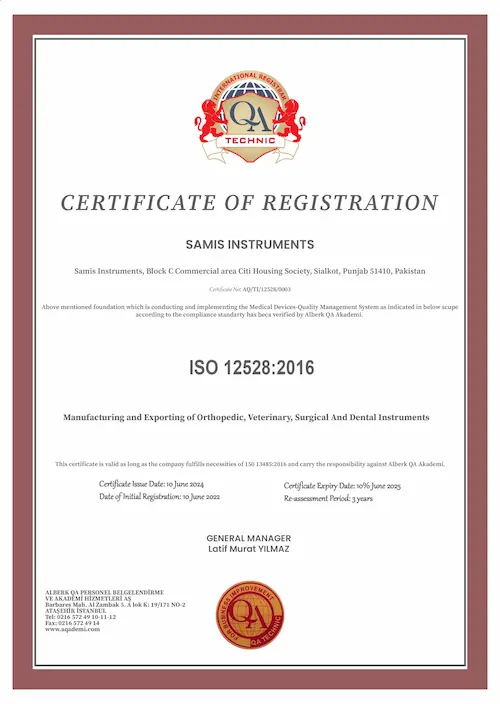
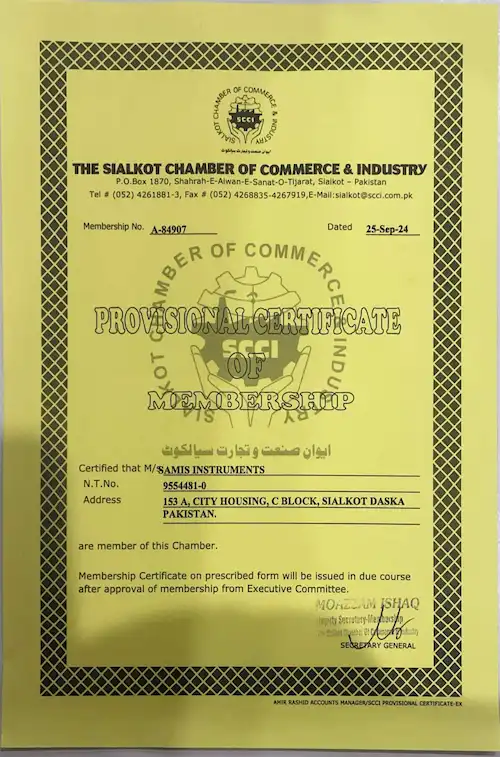
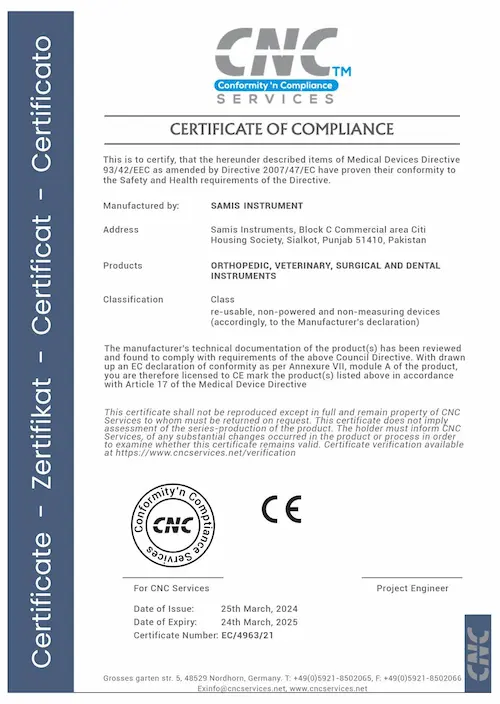
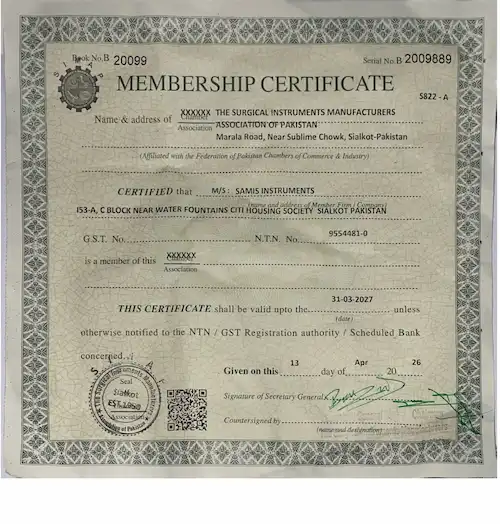
ISO, CNC, Chamber of Commerce & Surgical Instruments Manufacturers Association Certification Images – Sami’s Instruments

Write a Review