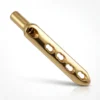
What Is a DHS Locking Plate?
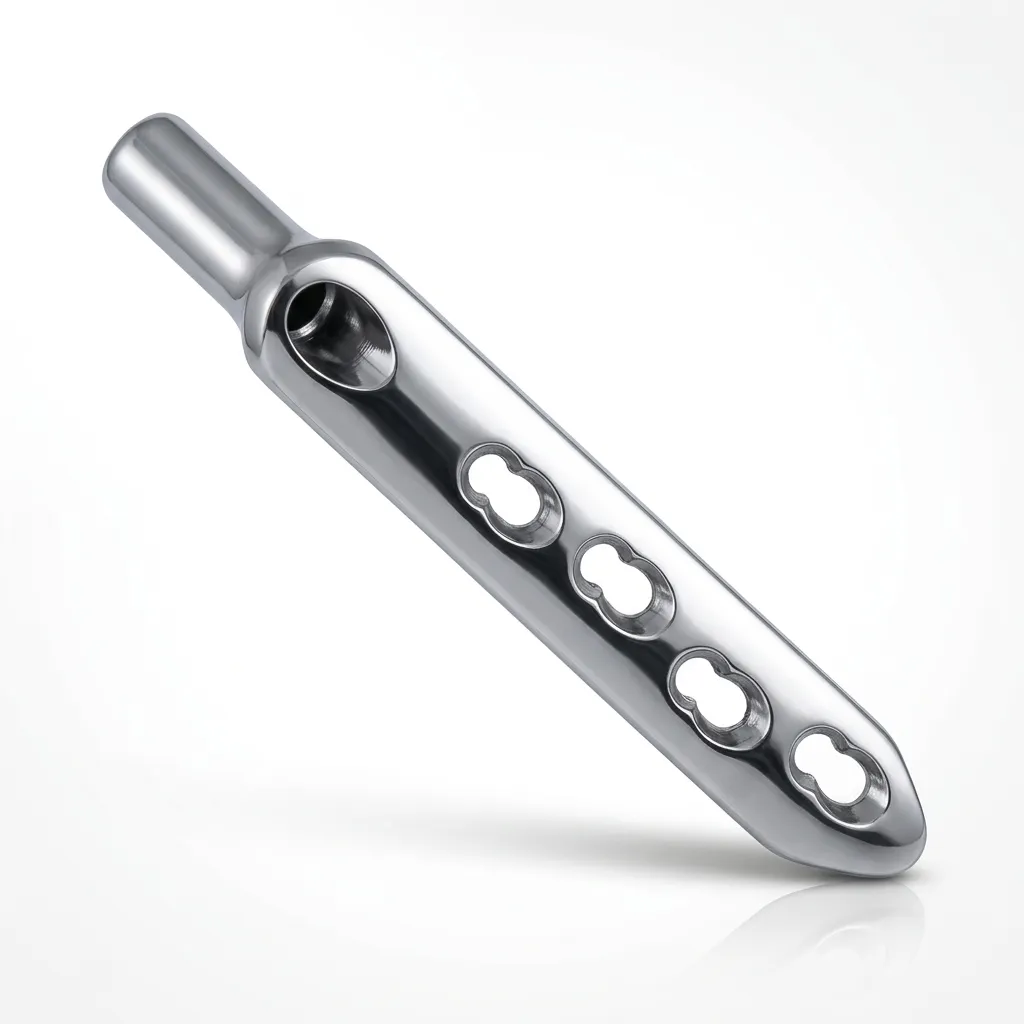
The DHS Locking Plate is an orthopedic trauma implant. DHS stands for Dynamic Hip Screw. Surgeons use this plate to fix fractures in the upper part of the femur, also known as the proximal femur. Specifically, the plate attaches to the femoral shaft and works together with a lag screw. The lag screw sits inside the barrel of the plate.
How the Locking Mechanism Works
What makes this a locking plate? The screw holes in the shaft carry threads. As a result, these threads lock the cortical screws to the plate at a fixed angle. Therefore, the plate and screws act together as one solid unit. This is different from a standard DHS plate, where screws rely only on friction against the bone surface.
What Fractures Does It Address?
Orthopedic surgeons commonly use the DHS Locking Plate in fixation procedures for the following fracture types:
- Intertrochanteric femur fractures
- Pertrochanteric femur fractures
- Subtrochanteric fractures
- Basilar neck fractures, in applicable cases
However, the choice of implant for any patient rests entirely with the treating surgeon. They base this decision on clinical findings, imaging, fracture type, and the patient’s bone condition.
This product is for use by qualified orthopedic surgeons and medical professionals only.
Product Configuration
The DHS Locking Plate comes in a wide range of configurations. As a result, surgeons can match the implant closely to each patient’s anatomy and fracture pattern. The main selectable options are described below.
Plate Angle
First, the barrel angle sets the path of the lag screw through the femoral neck. Six angles are available to choose from:
- 120°
- 125°
- 130°
- 135°
- 140°
- 145°
The surgeon selects the angle that best matches the patient’s proximal femoral anatomy.
Barrel Length
In addition to the angle, buyers can choose from two barrel lengths:
- Long Barrel
- Short Barrel
In general, barrel length corresponds to the lag screw length used. For example, shorter lag screws typically pair with a short barrel. The surgeon confirms the right option based on the surgical plan.
Number of Plate Holes
Furthermore, the shaft section of the plate is available from 4 holes up to 14 holes. More holes give a longer plate. The surgeon selects plate length based on fracture extent, bone quality, and fixation needs.
Screw Options
Finally, screw type and quantity depend on the plate configuration selected. Buyers can specify screw requirements at the time of ordering.
Available Sizes
This plate is available in the following size selections:
- 1.5 mm
- 2.0 mm
- 2.7 mm
- 3.0 mm
- 3.5 mm
- 4.0 mm
- 4.5 mm
- 5.0 mm
- 5.5 mm
- 6.0 mm
- 6.5 mm
- 7.0 mm
- 7.5 mm
- 8.0 mm
Color Options
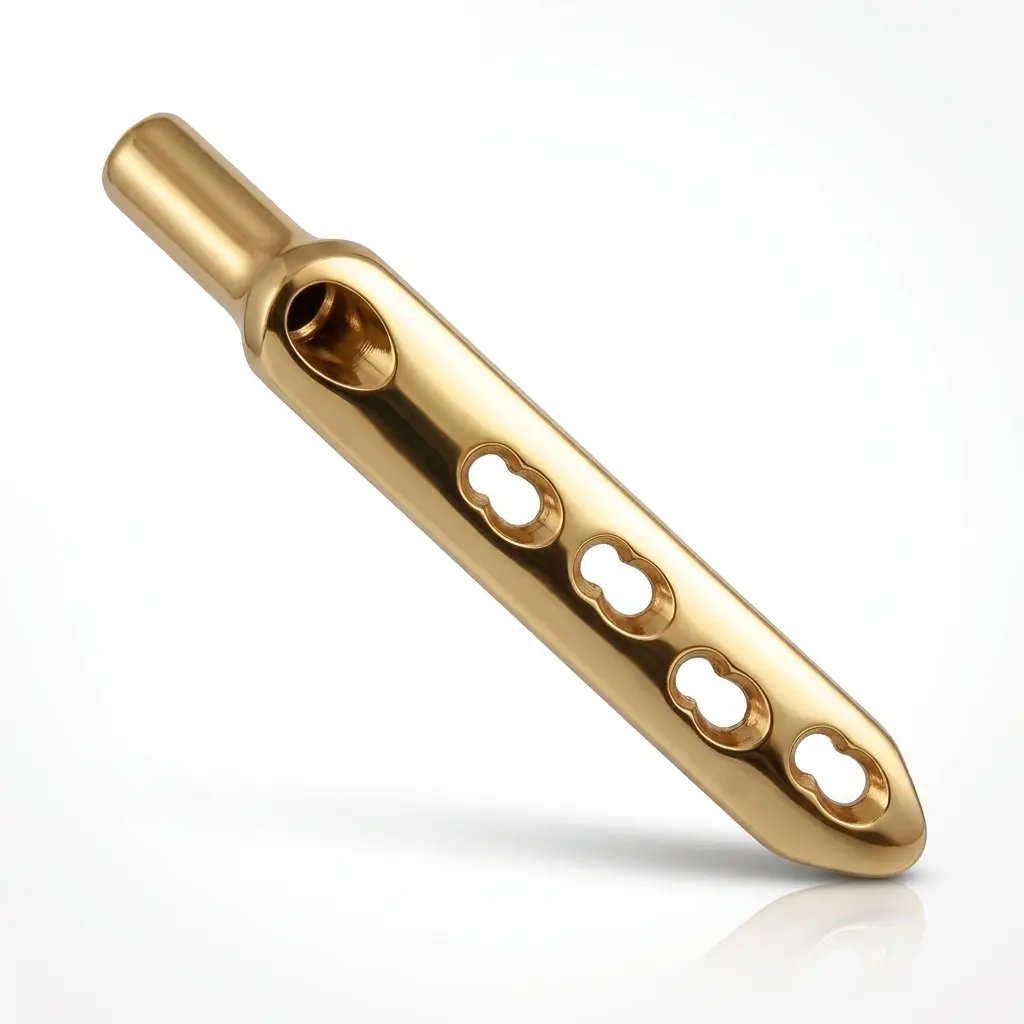
The DHS Locking Plate is available in three color options:
- Silver
- Blue
- Gold
How to Order
Sami’s Instruments supplies the DHS Locking Plate to hospitals, surgical centers, procurement teams, and orthopedic distributors worldwide. Because this plate comes in multiple configurations, we recommend contacting us directly before placing an order. Our team will help you confirm the right angle, barrel length, hole count, size, and screw options.
To get started, use the inquiry form on this page or contact our team directly to request a quote or check availability.
About Sami’s Instruments
Sami’s Instruments is an orthopedic and surgical implant manufacturer. We established the company in 2004, and we operate from Sialkot, Pakistan — a city with a long history in surgical instrument manufacturing. We also maintain an office in Brooklyn, New York. Our product range covers orthopedic plates, screws, surgical mallets, scissors, and related instruments. We manufacture using medical-grade stainless steel and titanium, and we ship to customers worldwide.
Frequently Asked Questions
What is a DHS Locking Plate used for?
Orthopedic surgeons use the DHS Locking Plate to help stabilize fractures in the proximal femur — the upper part of the thigh bone near the hip. Common fracture types include intertrochanteric, pertrochanteric, and subtrochanteric fractures. However, the surgeon always decides whether this implant suits a specific patient.
What is the difference between a standard DHS plate and a DHS Locking Plate?
A standard DHS plate holds to the bone through screw friction alone. A locking plate, on the other hand, uses threaded screw holes. The screws lock into the plate at a fixed angle, so the plate and screws form one rigid unit together. This construction may be useful in cases with reduced bone density or more complex fracture patterns, as determined by the surgeon.
What angle options are available?
The DHS Locking Plate is available in six barrel angles: 120°, 125°, 130°, 135°, 140°, and 145°. The surgeon selects the angle that best matches the patient’s proximal femoral anatomy and the required direction of the lag screw.
What is the difference between the long barrel and short barrel?
The barrel is the part of the plate that houses the lag screw. A long barrel accommodates a longer lag screw, while a short barrel suits a shorter one. In each case, the surgeon selects barrel length based on the lag screw used and the specifics of the procedure.
How many plate holes are available?
The plate shaft is available from 4 holes up to 14 holes. Surgeons select plate length according to the fracture extent and the fixation length needed along the femoral shaft.
What materials does Sami’s Instruments use?
Sami’s Instruments manufactures orthopedic implants using medical-grade stainless steel and titanium. For specific material details on this product, please contact us directly.
Can I order specific screw configurations with the plate?
Yes. Screw options depend on the plate configuration you select. Therefore, we recommend contacting our team at the time of ordering to specify your exact screw requirements.
Does Sami’s Instruments ship internationally?
Yes. We supply hospitals, surgical centers, and distributors worldwide. Contact us to discuss your order and shipping requirements.
How do I request a quote?
Simply use the inquiry form on this product page, or contact our team directly. To get an accurate quote, please include the angle, barrel length, number of holes, size, and any screw requirements when you reach out.
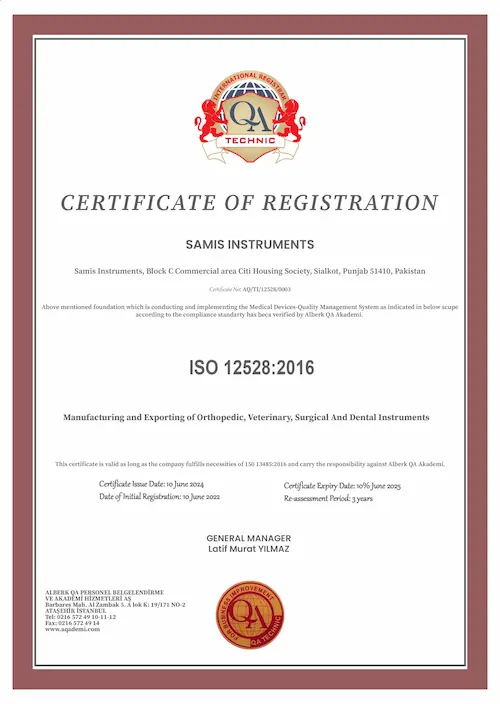
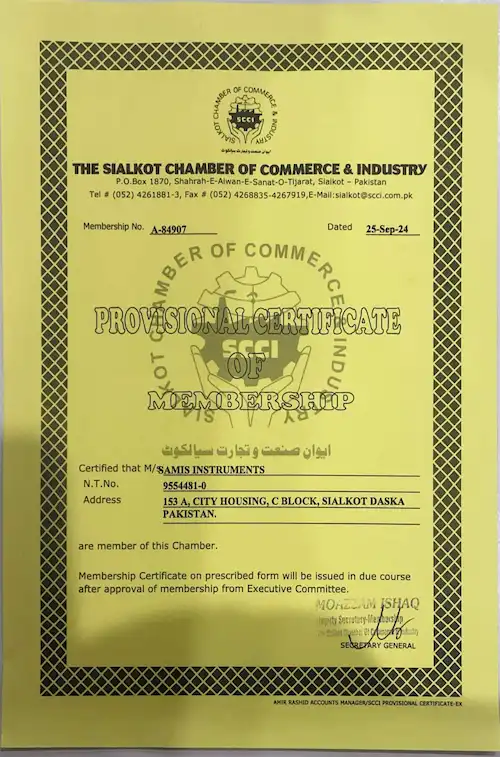
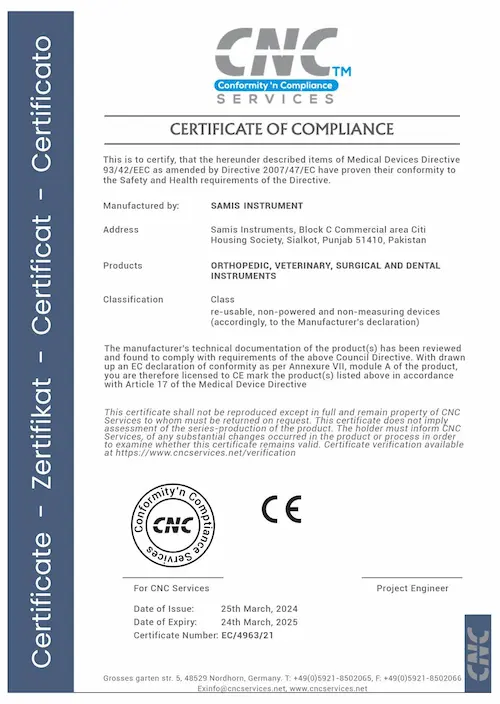
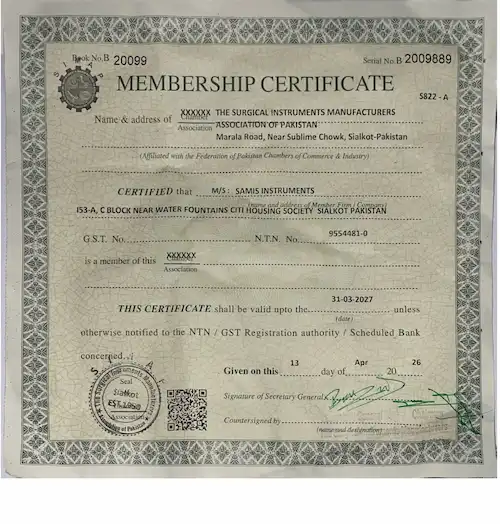
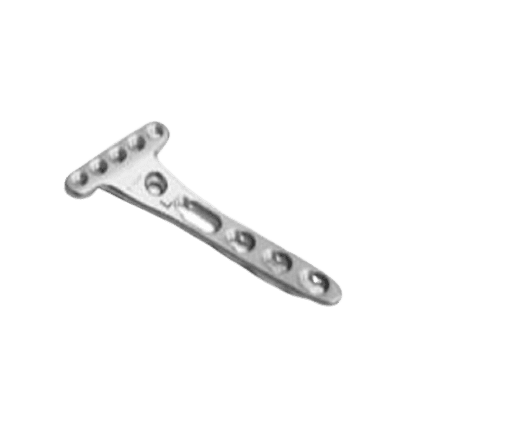
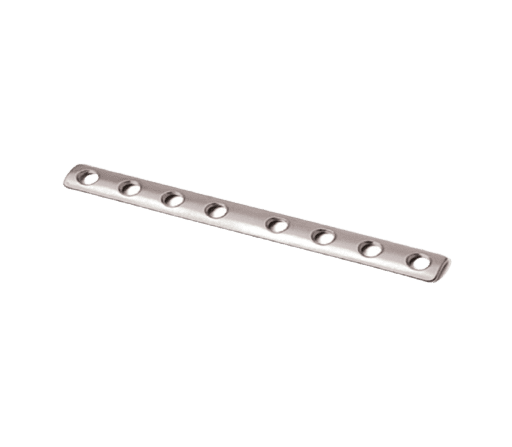
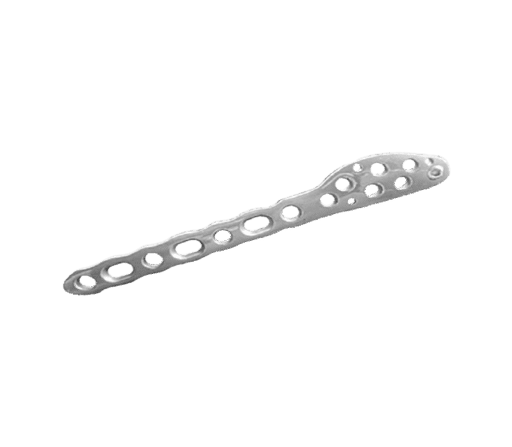
ISO, CNC, Chamber of Commerce & Surgical Instruments Manufacturers Association Certification Images – Sami’s Instruments

Write a Review