
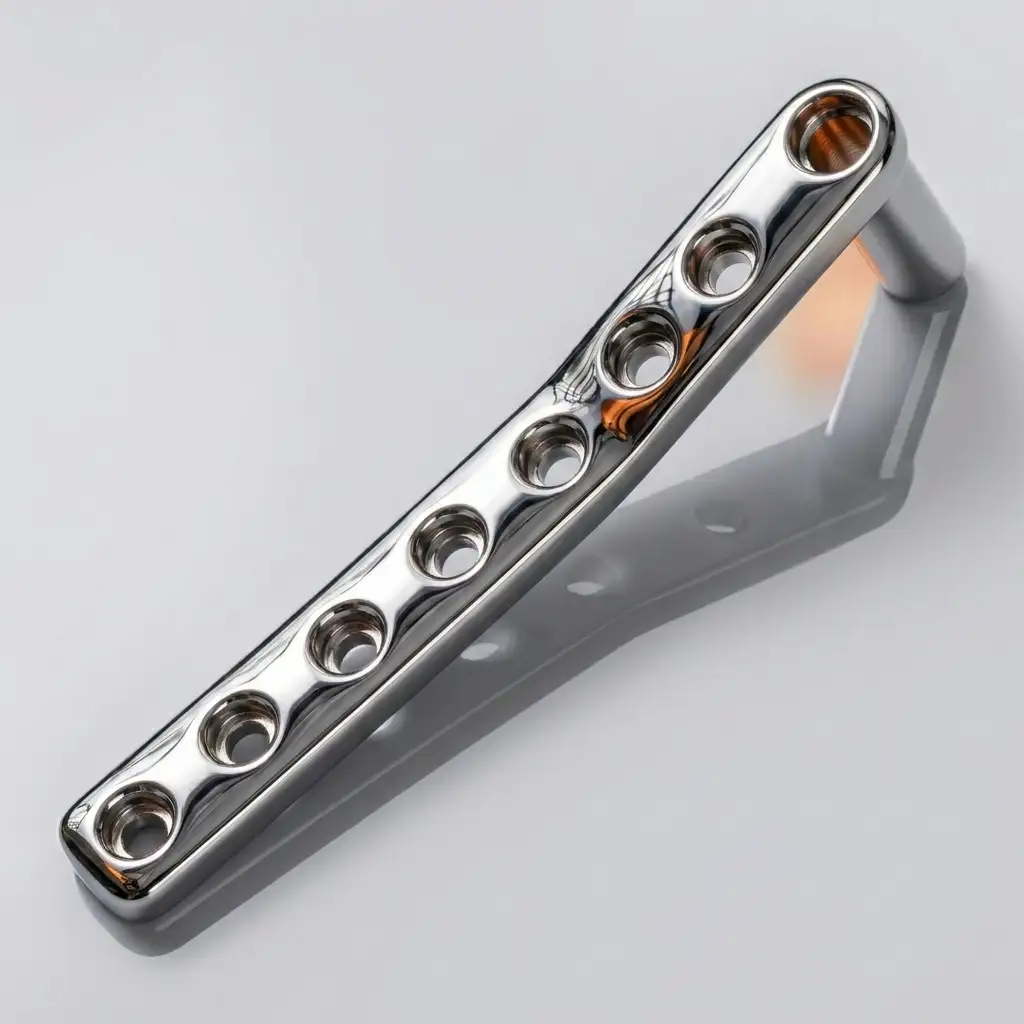
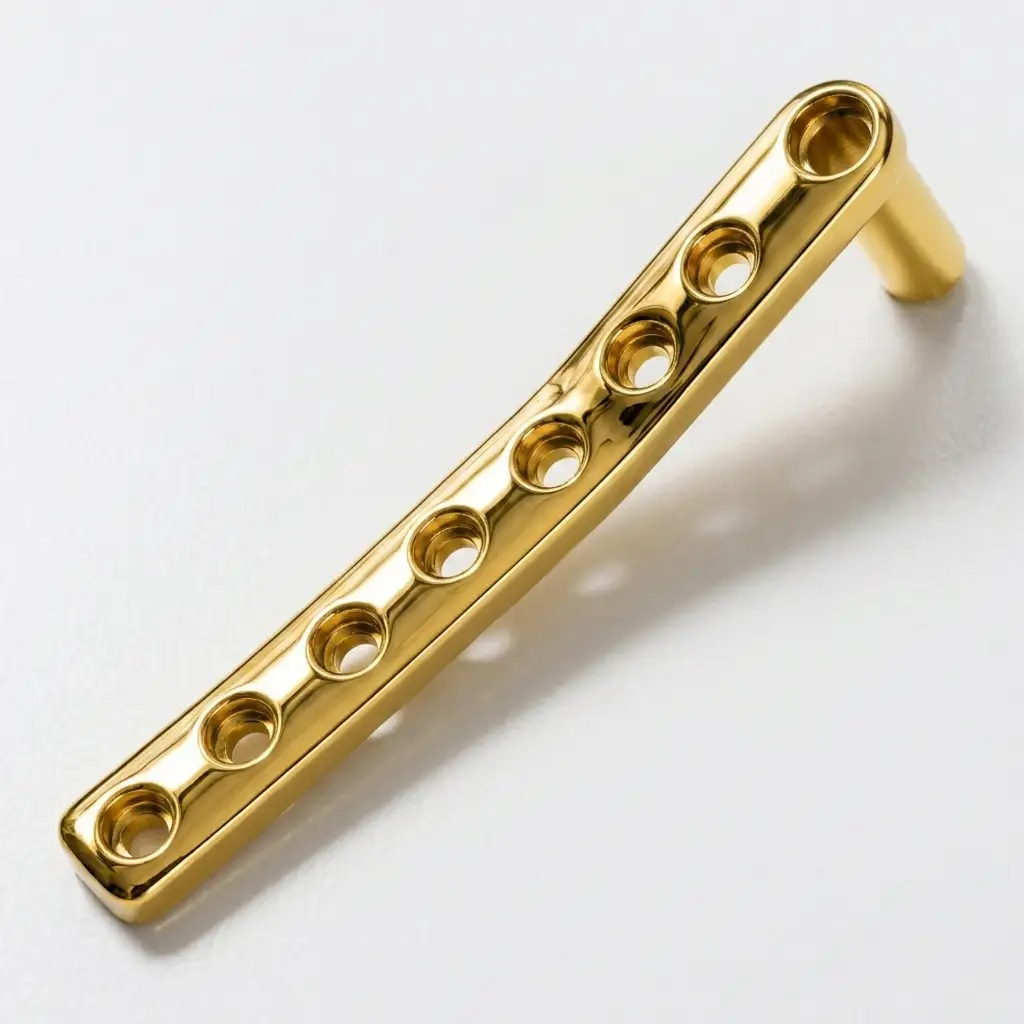
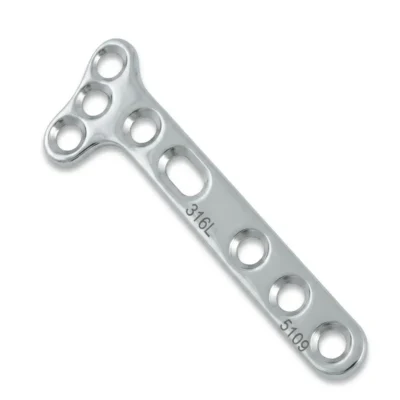
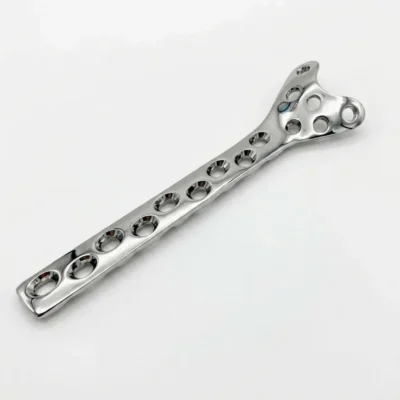
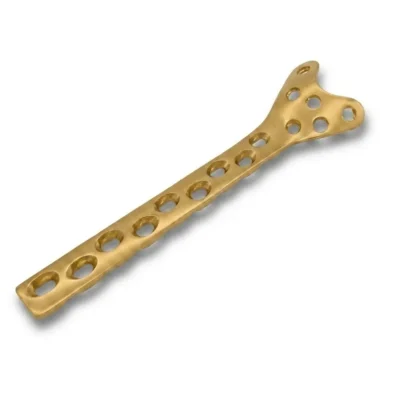
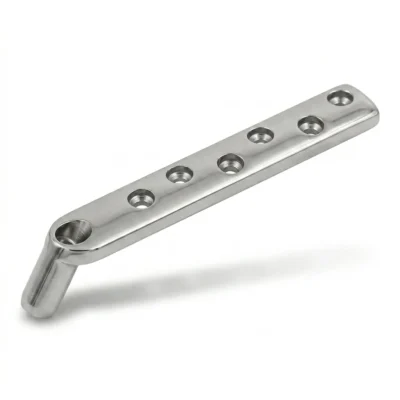
The DCS Plate 95D (Round Hole) belongs to the Dynamic Condylar Screw (DCS) fixation system. Surgeons commonly use this system for distal femur fractures. In some cases, they also use it for subtrochanteric femur fractures.
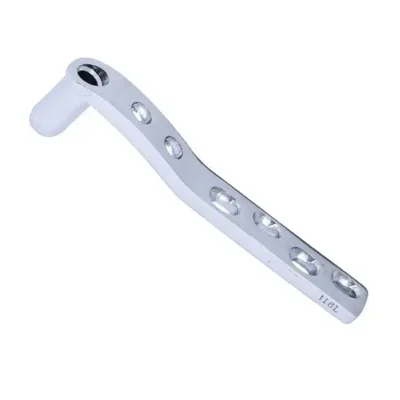
The DCS system pairs a lag screw with an angled side plate. The plate’s barrel sits at a fixed 95-degree angle relative to the plate shaft. This angle positions the barrel to accept the lag screw along the femoral neck or condylar axis. Meanwhile, the plate shaft rests against the lateral femoral cortex.
This configuration features a round-hole shaft design. Round holes differ from combination or dynamic-compression holes. Surgeons use round holes with standard cortical screws to secure the plate shaft along its length.
The 95-degree angle defines this plate type. It sets the DCS Plate 95D apart from other angled devices, such as 130-degree or 120-degree condylar plates. This fixed angle delivers consistent screw-to-shaft geometry across cases. That consistency is one reason surgeons choose DCS constructs for distal femoral and select subtrochanteric fixation.
Sami’s Instruments offers the DCS Plate 95D (Round Hole) in twelve hole configurations. These range from a compact 4-hole plate to an extended 20-hole plate. This range supports different plate lengths and fixation spans based on the fracture pattern and surgical plan.
General Applications (Revised)
Orthopedic literature commonly links the 95-degree DCS construct to distal femoral fracture fixation. This includes supracondylar and certain condylar fracture patterns. Surgeons have also used it historically for select subtrochanteric femoral fractures.
Fixed-angle devices like the 95-degree DCS plate offer one option among several. Surgeons also consider other fixed-angle plates, locking plates, and intramedullary devices. The right choice depends on the fracture pattern, bone quality, and surgeon assessment.
This section provides general product-category context only. It does not offer surgical guidance or treatment recommendations.
Material (Revised — Steel & Titanium Options)
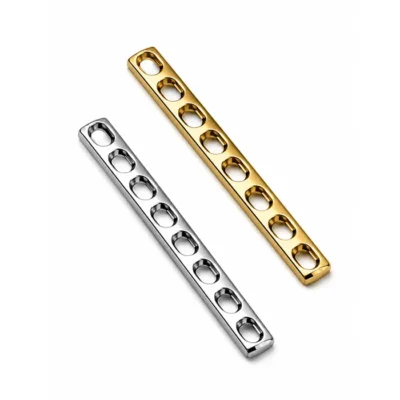
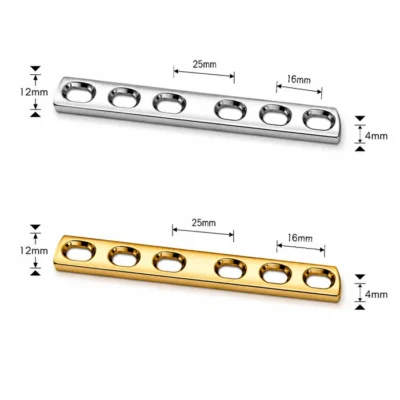
Material: Available in premium German stainless steel and titanium, according to the manufacturer’s product information.
Sami’s Instruments manufactures the DCS Plate 95D (Round Hole) in two material options. Buyers can choose stainless steel or titanium based on their fixation requirements and facility preferences. Do not add a specific alloy or titanium grade unless you confirm it — let me know if you have a verified grade (e.g., Ti-6Al-4V) you want listed, otherwise I’ll keep this generic.
Why Choose This DCS Plate 95D (Revised)
The DCS Plate 95D (Round Hole) delivers a fixed 95-degree barrel angle and a round-hole shaft design. Surgeons rely on this design for standard DCS fixation workflows. Twelve hole-count options let distributors stock a full size range from one product line. Sami’s Instruments manufactures each plate from premium German stainless steel or titanium, according to the manufacturer’s product information. Every plate follows the consistent geometry that DCS-system components require.
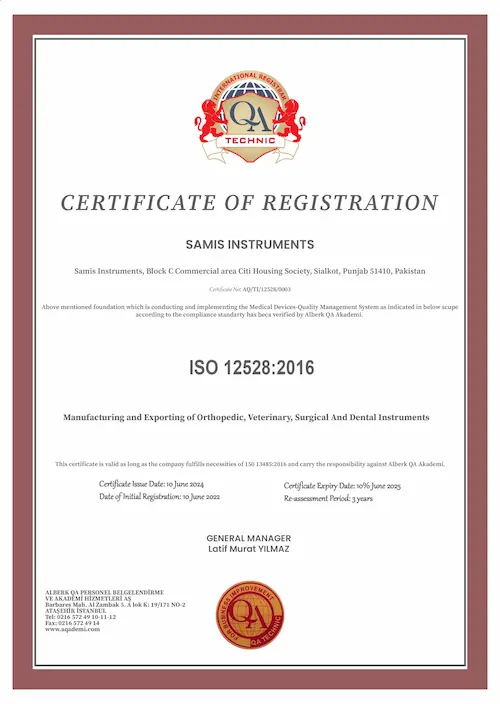
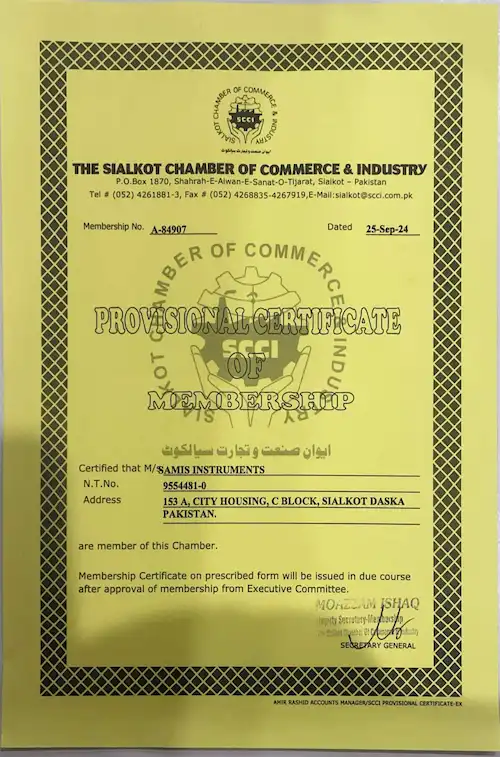
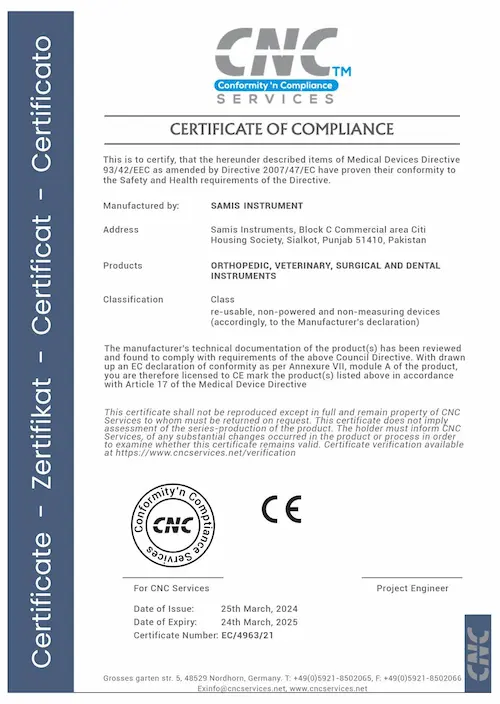
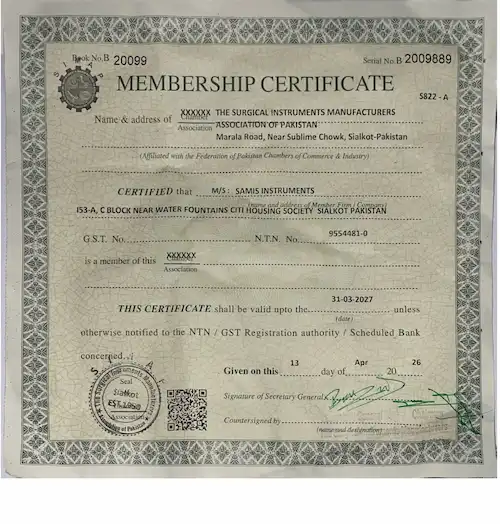
ISO, CNC, Chamber of Commerce & Surgical Instruments Manufacturers Association Certification Images – Sami’s Instruments




Write a Review